TRADINGVIEW TO TRADOVATE
TradingView to Tradovate Automation
Turn TradingView alerts into Tradovate futures orders. Connect a webhook to Copygram, choose your receiver accounts, and control contract size, symbols and exits from one cloud dashboard.
One Alert, Multiple Accounts
Futures Account Controls
No Local VPS Required
Cloud-Based Automation
WHAT IS IT
What is TradingView to Tradovate Automation?
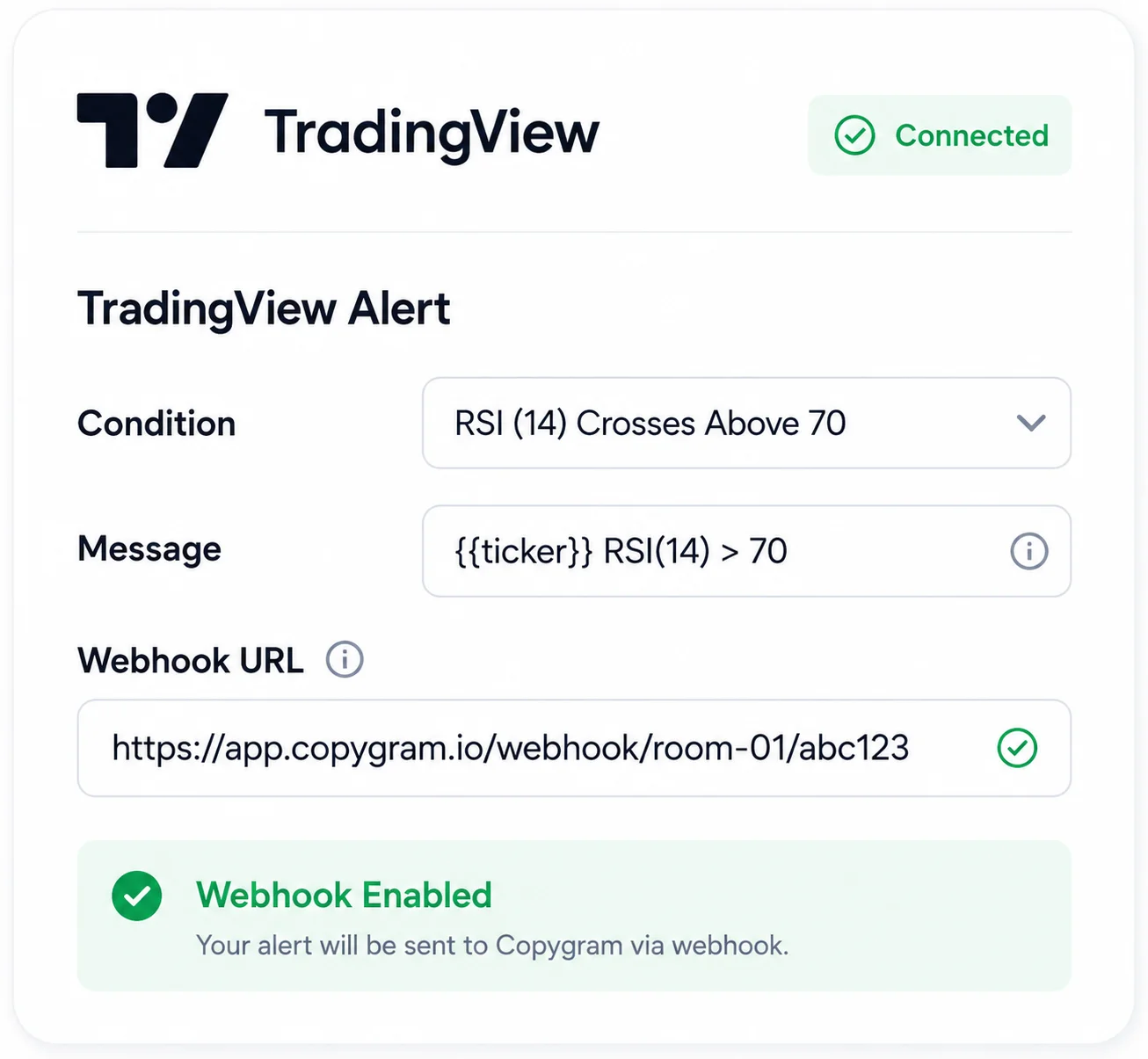
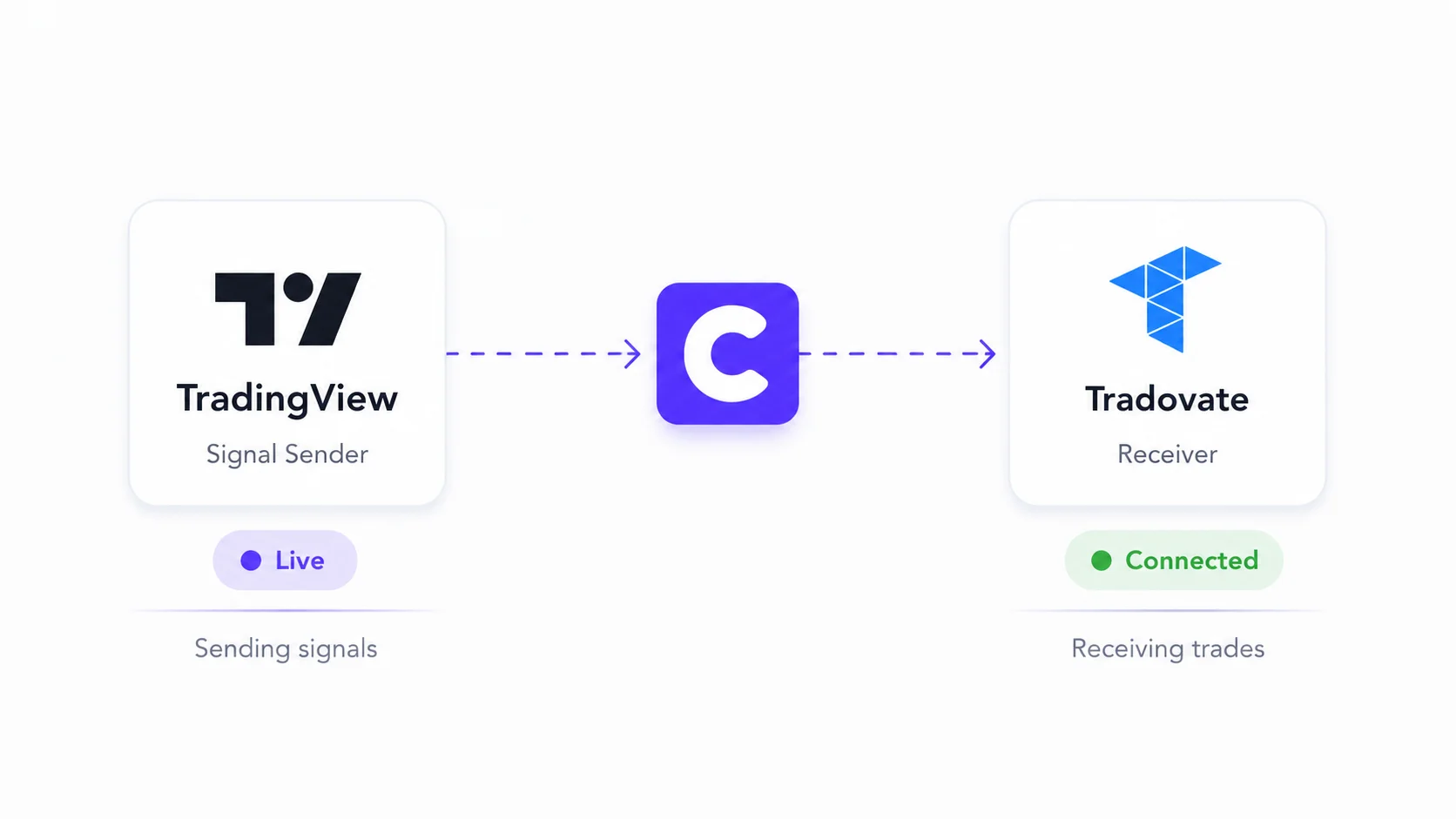
TradingView to Tradovate automation routes indicator or strategy alerts to your futures account through a webhook. Copygram receives the alert, interprets its trade instructions and applies your account settings before sending an order to Tradovate. A Copygram Room connects one source to one or more receiver accounts, each with its own sizing and symbol settings.
Connecting Tradovate in TradingView’s trading panel lets you trade from the chart; webhook automation adds the route from an alert to an order. For prop-firm accounts, confirm that the firm allows your intended automation and copying setup before connecting.


Features
Control How Your Futures Alerts Become Orders
Set the receiver rules once, then review how each alert is routed, sized and managed.
Contract Size, Stop Loss and Take Profit
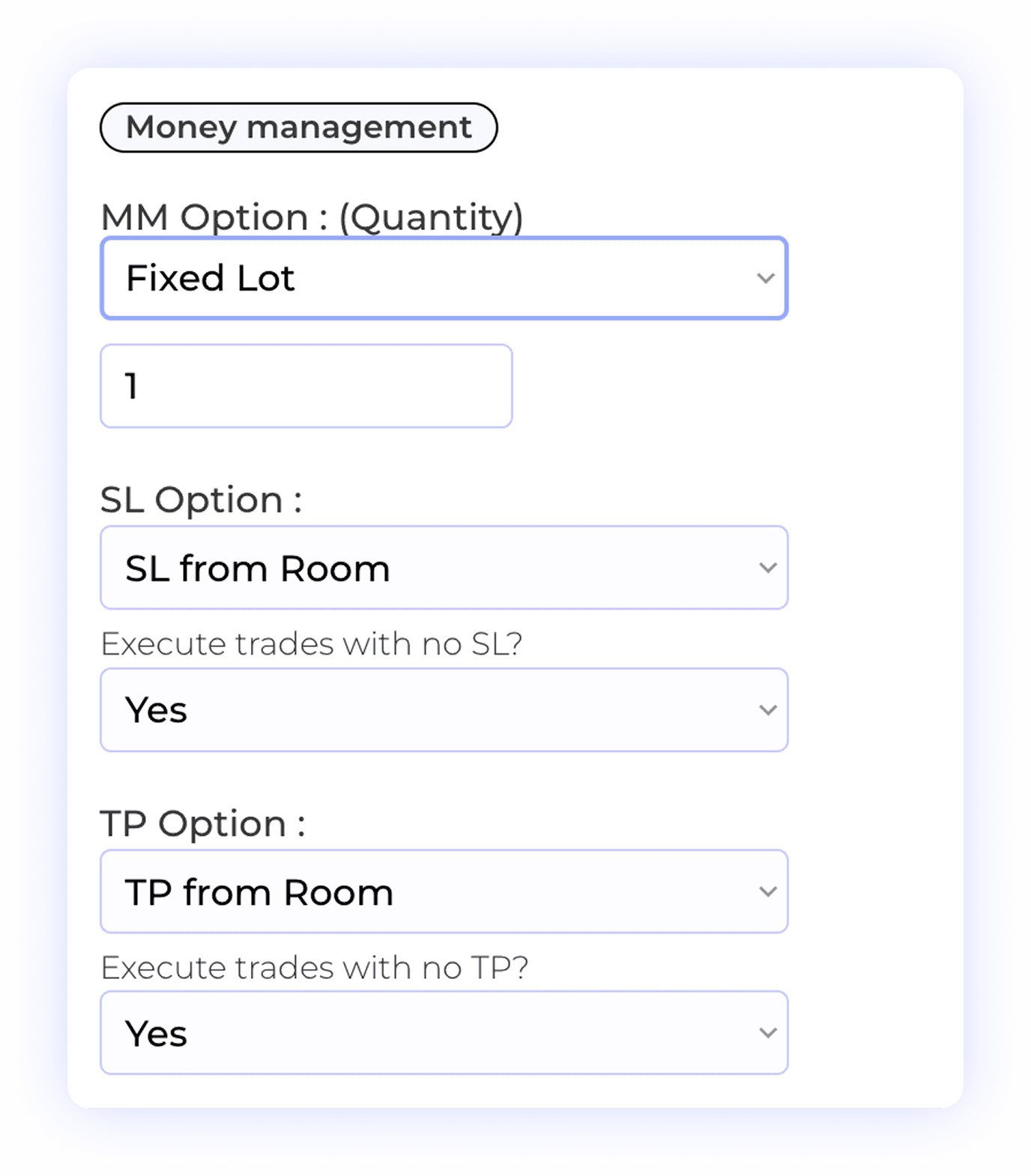
Set quantity independently for each Tradovate receiver. Futures orders use whole contracts, so check how your chosen sizing mode and any symbol exception translate into the final order. Configure whether to copy stop-loss and take-profit instructions and how to handle an alert that omits them. Review the resulting order before relying on the setup live.
Take Profit Settings
Stop Loss Management
Futures Symbol Mapping and Rollover
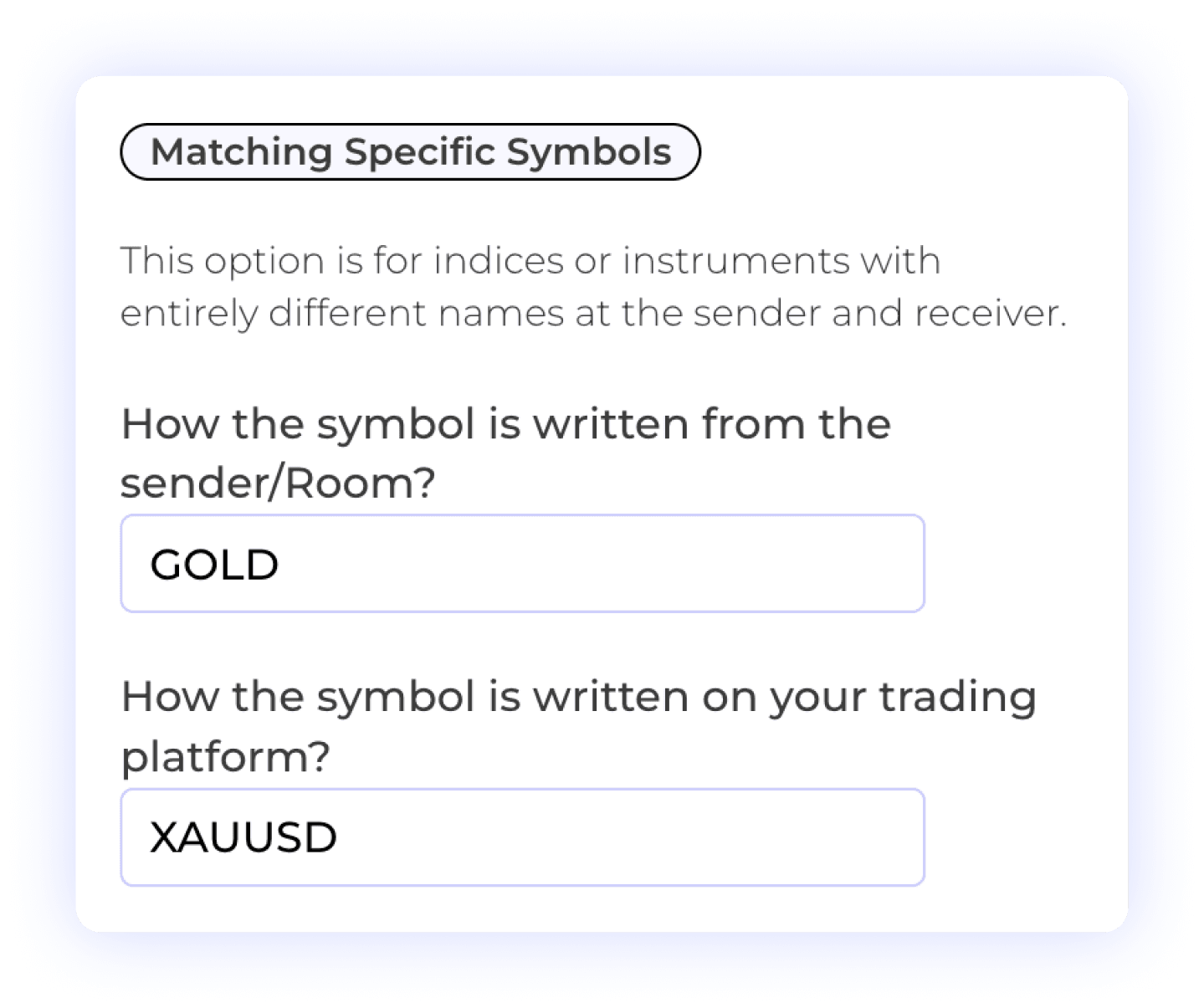
Match the symbol in your TradingView alert to the intended Tradovate contract. A continuous chart label such as ES1! and a dated futures contract are different references. Review receiver symbol mapping, the active expiry and contract availability when markets roll over; do not assume the chart’s native broker mapping also applies to your webhook route.
Custom Symbol Matching
Different Symbol Formats
User Control
Open, Modify and Close Orders
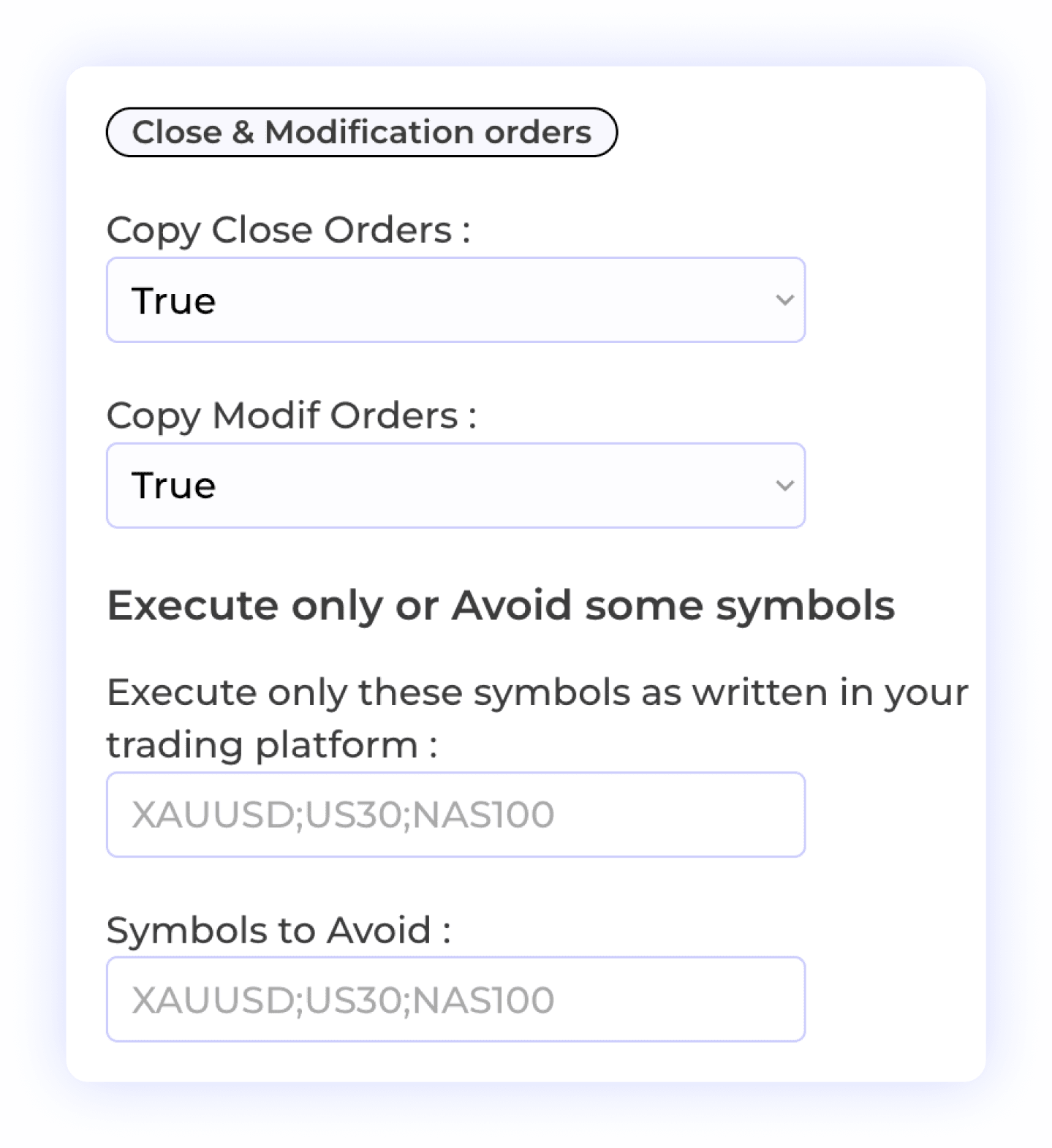
Choose whether each receiver accepts trade modifications and closes, and which symbols it may copy. When an alert opens a trade, give it a unique signal_id; reuse that same ID in the related modification or close instruction so Copygram can match the trade. Use the receiver’s Close opposite orders setting when that behavior is part of your strategy.
Order Modification
Selective Symbol Copying
Order Closure
Trade Flexibility
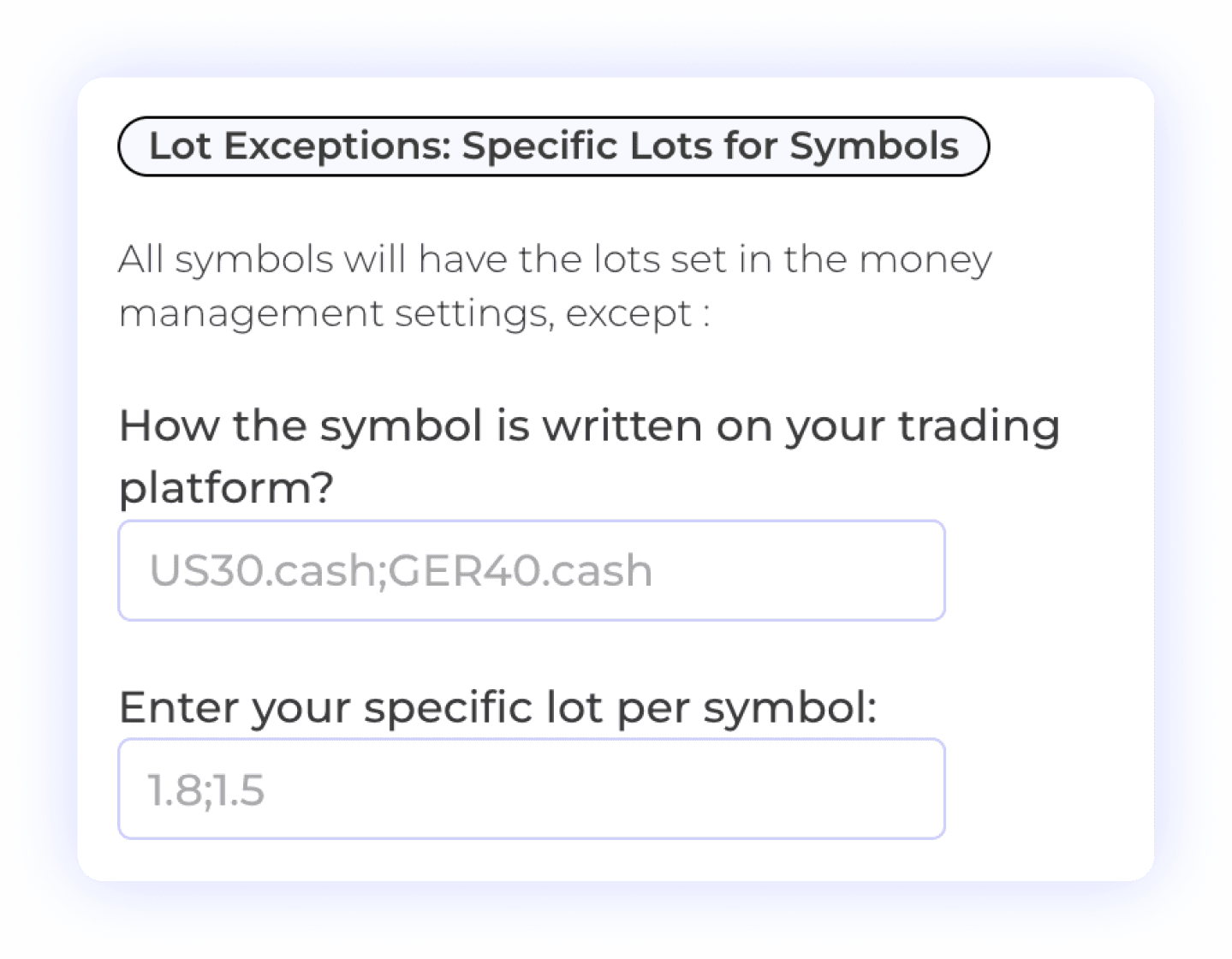
Quantity Exceptions by Futures Symbol
Use Symbol Lot Exceptions to set a different quantity for a specific instrument. In Copygram this setting overrides the default money-management quantity for the matched symbol. Confirm the final whole-contract size for each Tradovate receiver, especially when switching between micro and standard futures contracts.
Contract Quantities
Symbol-Specific Settings
Risk Management
Plan Multiple Take-Profit Exits
Copygram provides multiple take-profit settings and allocation controls. For Tradovate futures, plan exits around the whole contracts held in the position: a one-contract trade cannot be split into fractional contracts across targets. Verify the actual exit orders and quantity allocation on a supported simulation account.
Exit Targets
Whole-Contract Sizing
Target Allocation
User-Controlled Trading


Choose When Your Receiver Trades
Set a receiver’s trading days and time windows to match your workflow. Check the time zone shown in the settings and review schedules when daylight-saving time changes. Your schedule does not override exchange trading hours, maintenance breaks or the account’s permissions.
Trading Schedule
Trade Execution Timing
Automated Trading Control
Need help with symbols, receiver settings or alert messages? Read the Copygram setup guide →
WHY COPYGRAM
Why Use Copygram for Tradovate Automation?
Endless Possibilities
More TradingView Integrations
Explore other supported receivers and choose the connection that fits your trading account.
TradingView to NinjaTrader
Route indicator and strategy alerts to NinjaTrader futures accounts with independent contract mapping, whole-contract quantities and receiver settings.
TradingView to NinjaTrader


Route TradingView alerts to a supported DXtrade account. Review the account connection, symbol mapping and automation permissions before activating a receiver.
TradingView to DxTrade
Connect a TradingView alert source to a supported Binance account and configure the destination symbols, order quantities and receiver rules.
TradingView to Binance Futures

Send TradingView alert instructions to a connected TradeLocker receiver. Verify the symbols, order types and sizing used by your account.
TradingView to TradeLocker

Connect TradingView alerts to a supported OANDA account, then configure receiver settings and verify order behavior before live use.
TradingView to Oanda

Route indicator and strategy alerts to connected MT4 or MT5 accounts. Configure broker symbol mapping, lot sizing and trade-management settings for each receiver.
TradingView to Metatrader
Connect a TradingView alert source to a supported MatchTrader account. Set receiver rules for symbols, quantities and trade management.
TradingView to Matchtrader

More automations


FAQ
TradingView to Tradovate FAQ
Account setup, webhook alerts, futures contracts and copying rules—answered before you connect.
How do I connect TradingView alerts to Tradovate?
Connect your Tradovate account in Copygram, create a TradingView webhook connector, and use that connector as a Room’s source. Add the intended Tradovate receivers and configure their quantity and symbol settings. Paste the webhook URL into your TradingView alert, include clear trade instructions, and start the Room. Verify the route on a supported simulation account before using it live.
Do I need a paid TradingView plan?
You need a TradingView plan that includes webhook alerts, with two-factor authentication enabled. Check TradingView’s current plan comparison for availability and alert limits. Your Copygram subscription is separate. Copygram does not offer a free trial.
Can one TradingView alert copy to multiple Tradovate accounts?
Yes. A Copygram Room can route one TradingView source to multiple connected Tradovate receivers, each with its own sizing and symbol settings. The connected-account limits depend on your Copygram plan. For prop-firm accounts, confirm the firm’s automation and account-copying rules first.
Does Copygram require one specific JSON format?
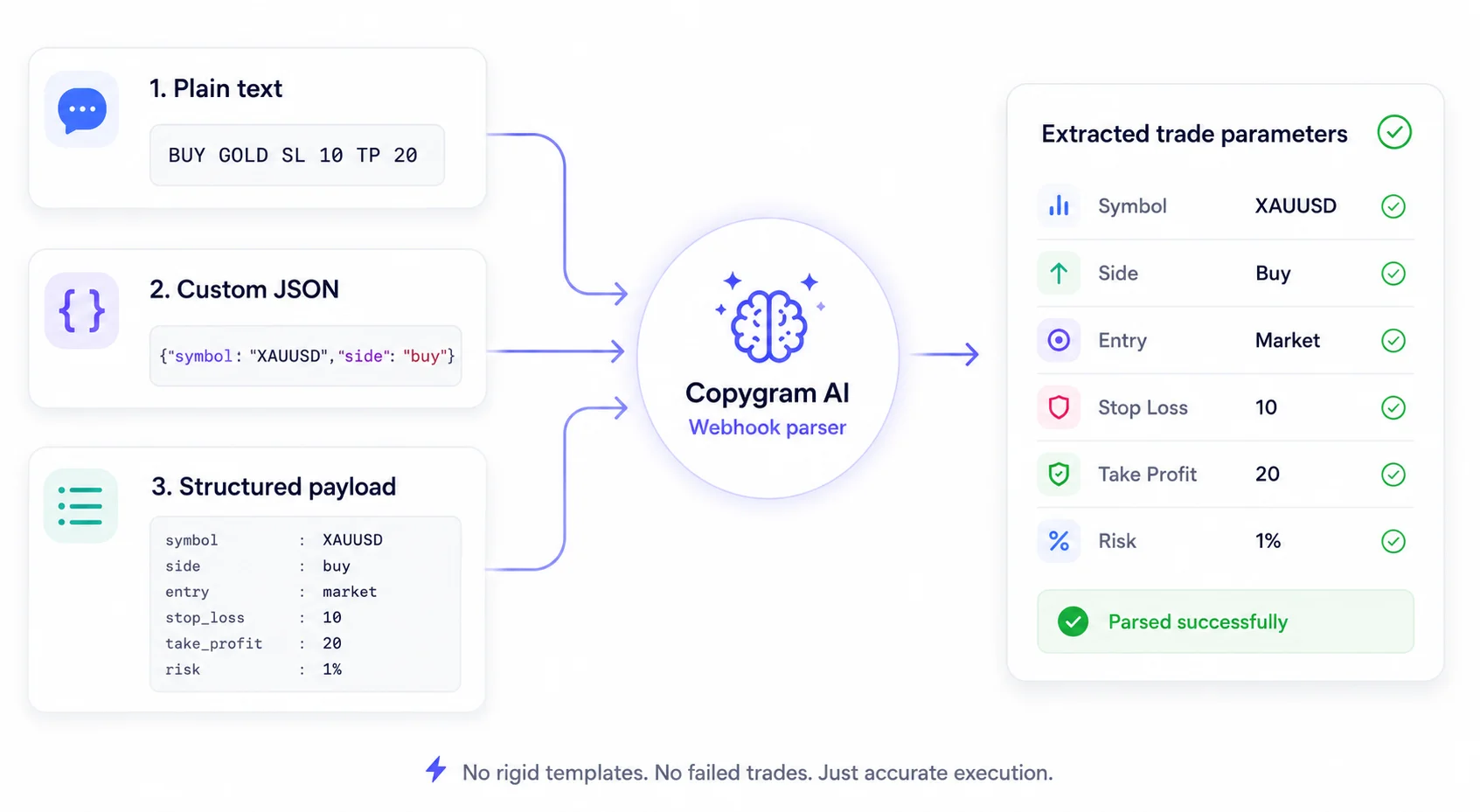
Copygram accepts clear plain-text messages and custom JSON. Include enough information to identify the trade action, symbol, quantity and any required entry or exit instructions. Flexible parsing does not mean every message is valid: check the parsed result and receiver order using your actual alert format.
Can I automate a Tradovate prop-firm account?
It depends on the firm’s current rules and the permissions on your Tradovate account. Confirm that automated orders, third-party connections and copying across your accounts are allowed for your evaluation or funded stage. Copygram does not bypass those restrictions or make a prohibited setup compliant.
Can I use Telegram and TradingView with Tradovate?
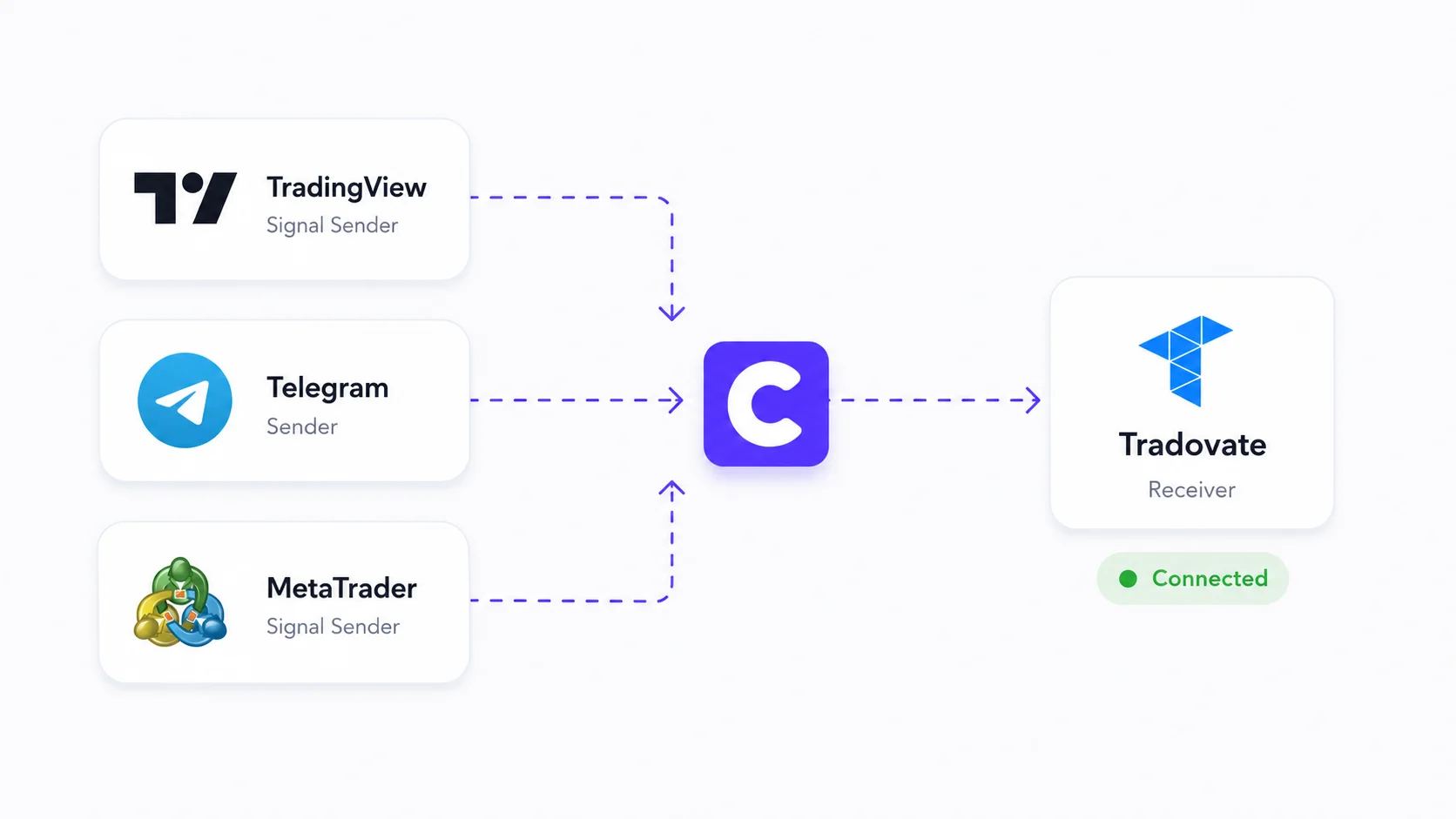
Copygram supports Telegram and TradingView sources. Each Room has one source, so create separate Rooms for separate sources and configure their receiver settings. When multiple sources trade the same account, review symbol overlap, sizing and close or modification rules so they do not conflict.
Is connecting Tradovate in TradingView the same as alert automation?
No. TradingView’s broker connection lets you place and manage orders from its trading panel. Copygram adds a webhook route that turns indicator or strategy alert instructions into orders on connected Tradovate receivers. Configure the alert, Room and receiver settings even if you already trade manually from the chart.
How should I handle ES1!, NQ1! and futures rollover?
Check which symbol your alert sends and which tradable contract the Tradovate receiver should use. Continuous chart symbols and dated contracts are different references. Use receiver symbol mapping when needed, confirm the expiry and whole-contract quantity, and review the mapping at rollover. Do not assume a continuous chart’s native broker mapping also applies to the webhook.
Why did my TradingView alert not create a Tradovate order?
Check that the alert fired and inspect Webhook status in TradingView’s alert log. Confirm the webhook URL, a started Copygram Room and a connected receiver. Then review Copygram’s logs for unclear instructions, symbol mapping, quantity, schedule or account-permission issues. For a modification or close, confirm that signal_id matches the original trade.