Automation
Automate TradingView Alerts to Binance Futures
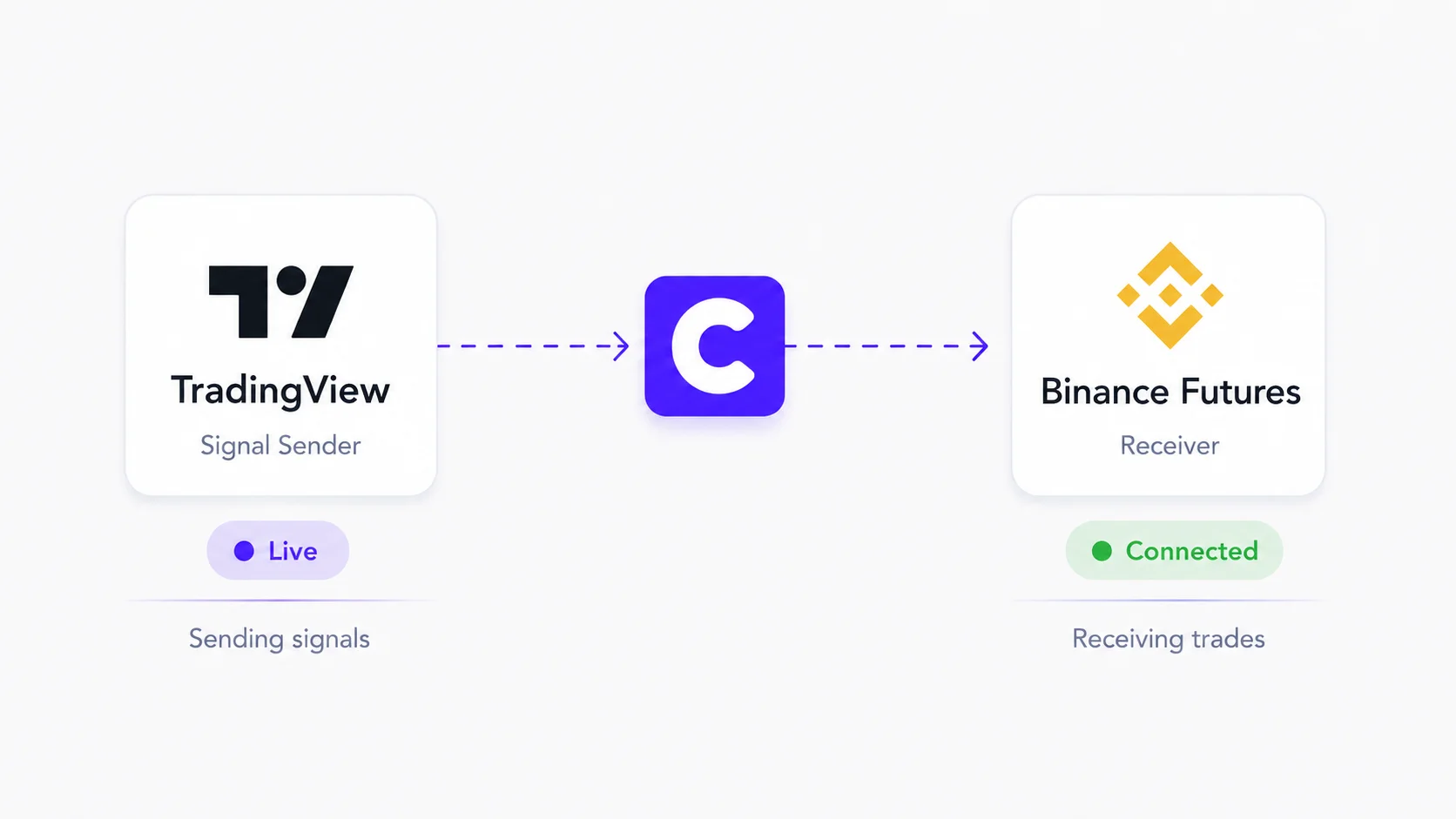
Turn your TradingView webhook alerts into orders on a connected USDT-margined Binance Futures account. Configure symbols, trade size and exits in Copygram. The connection runs in the cloud, with no VPS required.
ALERT CHECKLIST
Make the Alert, Message and Receiver Agree
A reliable workflow starts with a clear instruction and a verified destination. Use the current Copygram message guide for your source.
Indicator or Strategy?
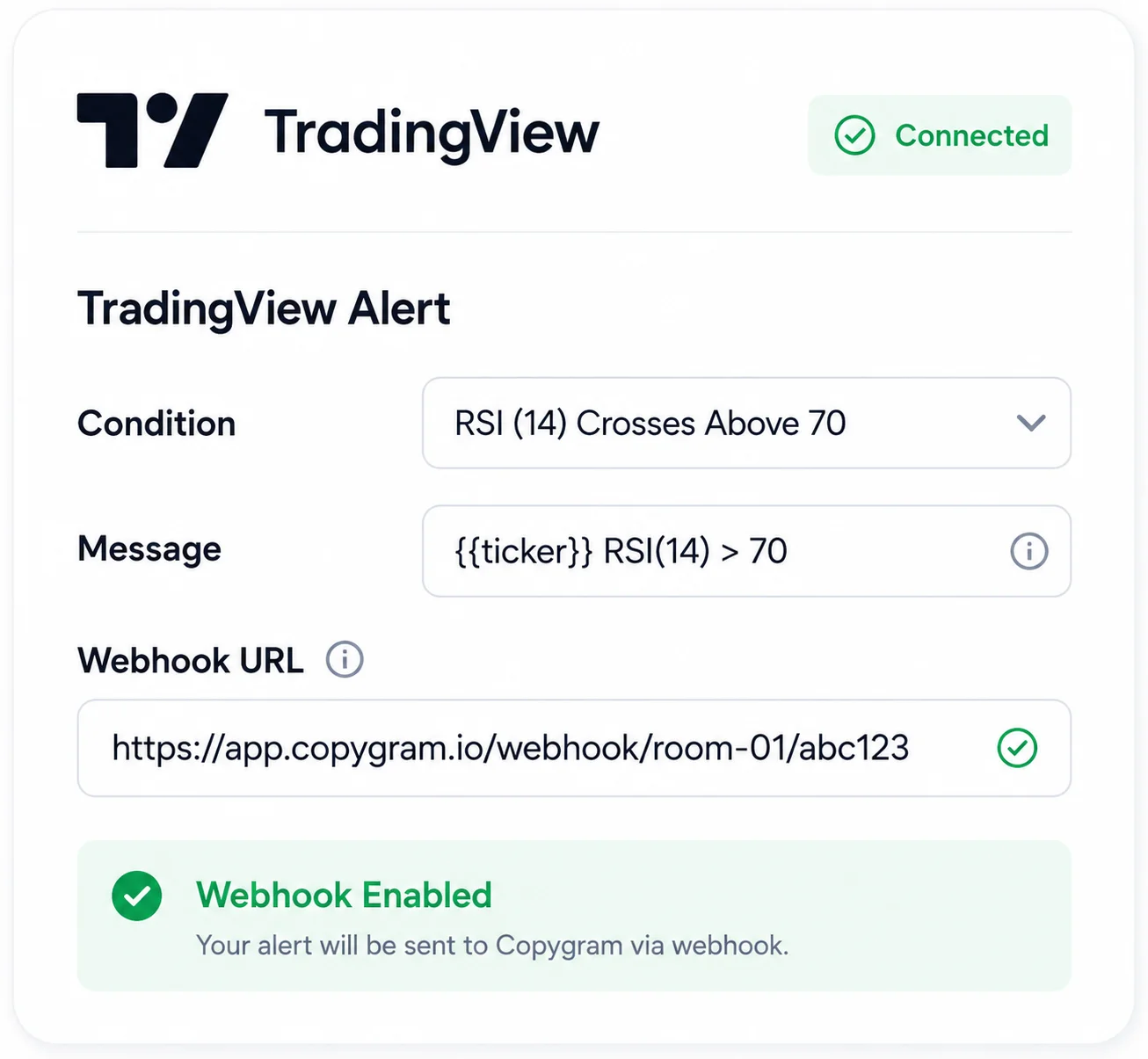
Choose the correct alert event for your script. Strategy order-fill alerts and indicator alerts are different sources of instructions; opening a trade manually on a chart does not create a webhook alert by itself.
Check the Resolved Message
TradingView replaces supported placeholders when an alert fires. Strategy placeholders work only in strategy alerts. Inspect the actual direction, symbol and size sent; do not assume a backtest quantity matches your Binance receiver.
Verify the Receiver Result
Start with the message format documented for Copygram. Confirm the parsed instruction, destination symbol and Binance order. A successful webhook delivery does not guarantee order acceptance or a particular fill price.
Features
Receiver Controls for Binance Futures
Set the behavior for each receiver before activating your Room. The same signal can require different quantities and symbols on different platforms.
Position Sizing and Exit Settings
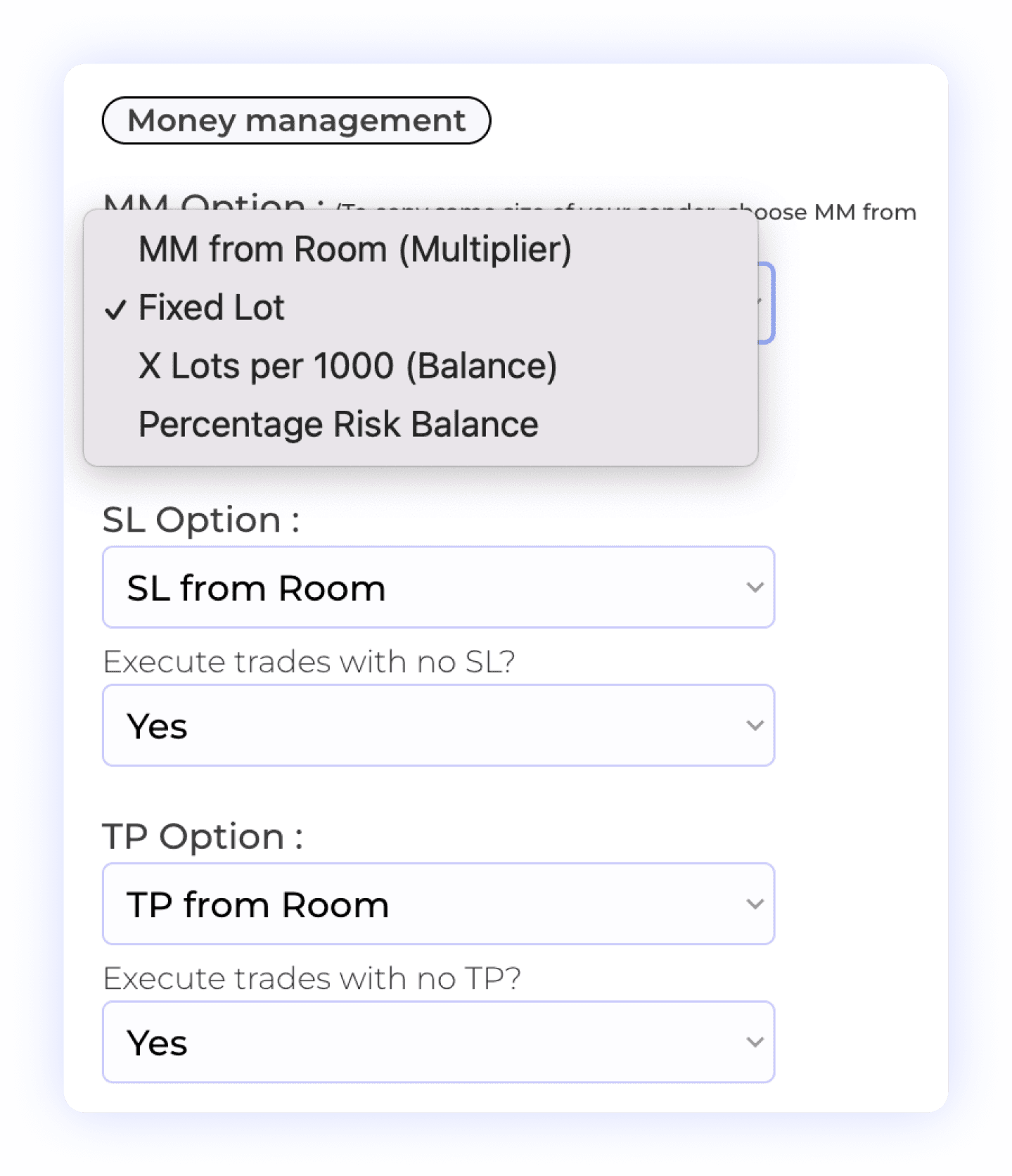
Choose the receiver’s money management settings and check the resulting Binance order quantity. Configure SL/TP handling and how signals without those fields should be treated. Contract size, quantity limits and available margin still matter; do not transfer a forex lot example unchanged.
Position Sizing
Take Profit Rules
Size Multiplier
Exposure Review
Stop Loss Rules

Leverage and Account Defaults
Set the Binance receiver’s leverage multiplier, or leave it blank to use the account’s default for that symbol. Leverage and order size are separate controls. Check both against the account’s limits before activation; increasing leverage does not improve the signal.
Leverage Settings
Account Defaults
Quantity Checks
Map the Exact Futures Symbol
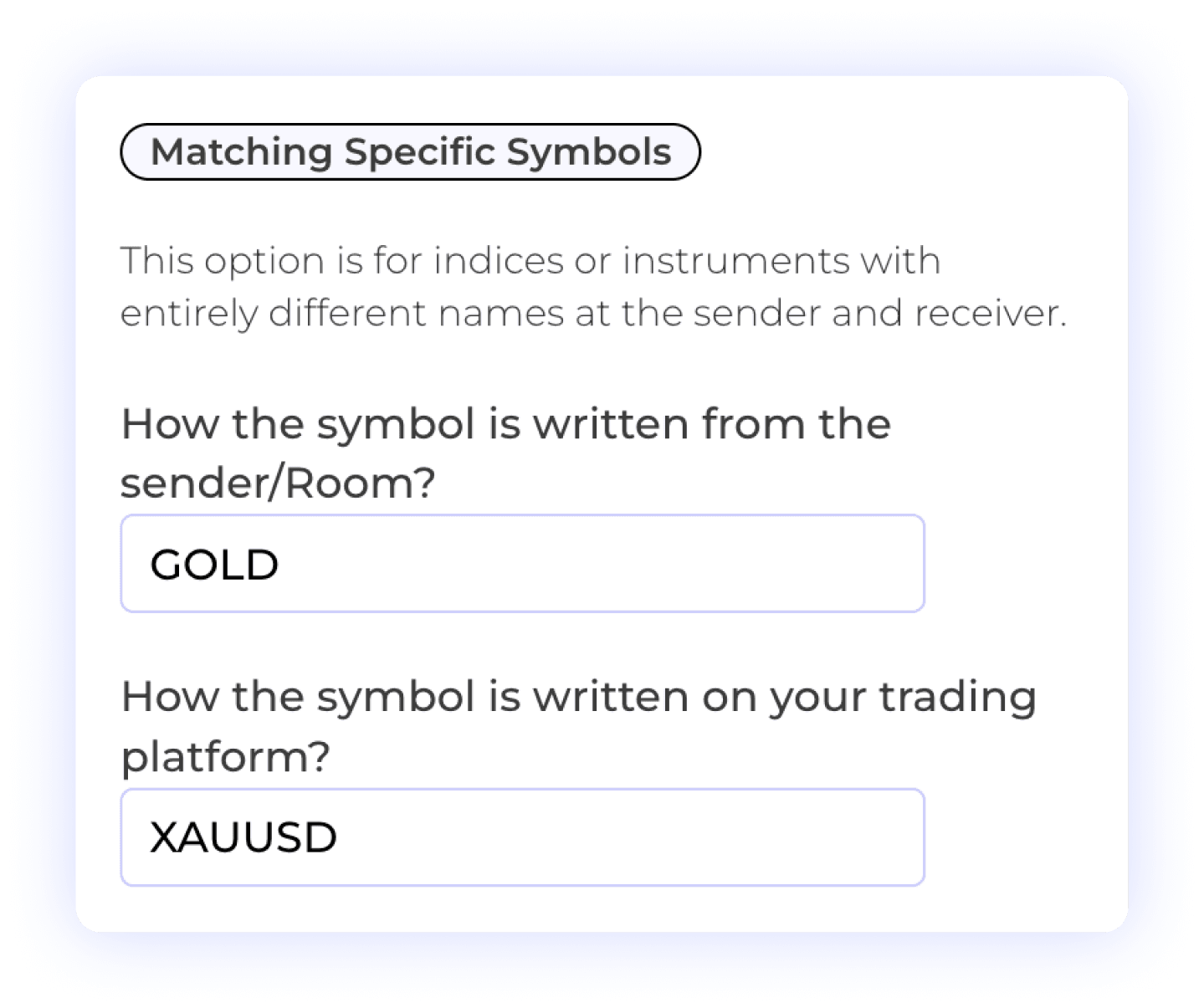
A TradingView chart can include an exchange prefix or contract suffix that differs from the receiver’s symbol. Map the incoming ticker to the exact supported Binance Futures instrument. Check the destination and signal log instead of assuming similarly named spot, CFD and futures products are interchangeable.
Custom Symbol Matching
Different Symbol Formats
User Control
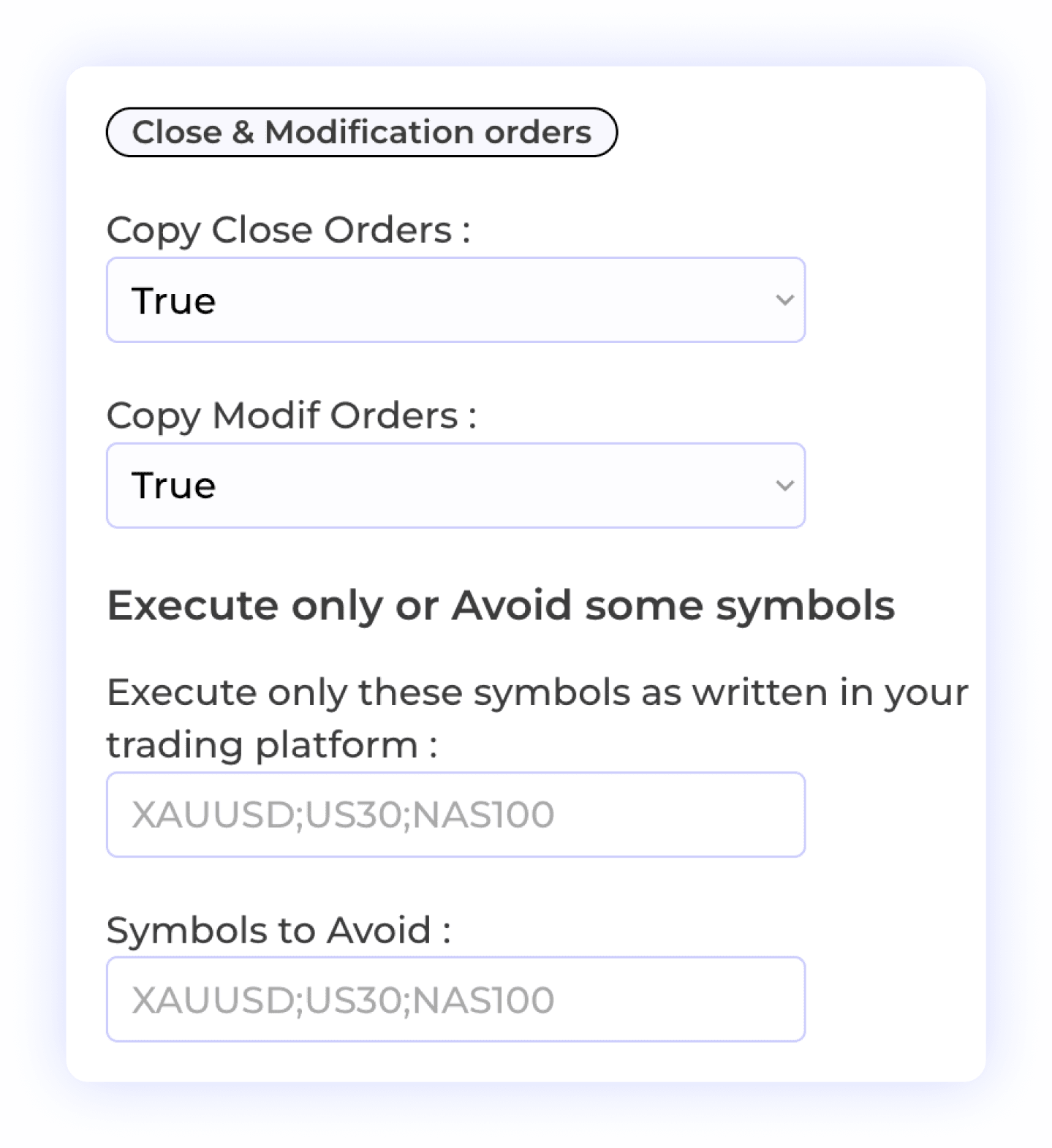
Decide How Positions Are Managed
Configure whether the receiver follows close instructions and SL/TP modifications. Check how your strategy expresses entries, exits and reversals in the documented alert format. A sell instruction is not always equivalent to closing an existing long position; verify the intended result for your setup.
Close and Modify Rules
Selective Symbol Copying
Order Closure
Trade Flexibility
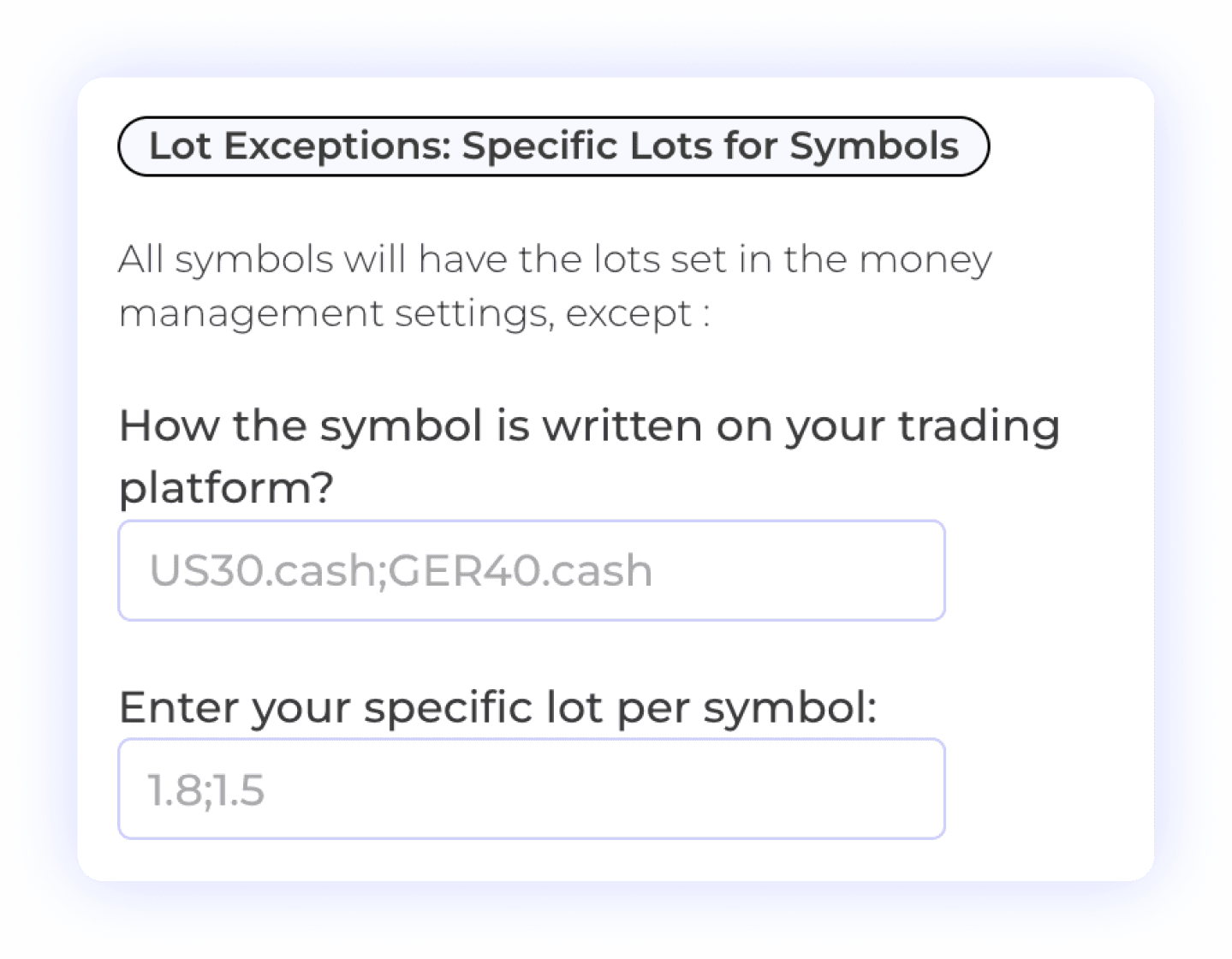
Symbol-Specific Size Overrides
Use Symbol Lot Exceptions when an instrument needs a different size from the receiver default. These overrides take precedence over the main money management setting. Review the resulting Binance quantity and exposure for each symbol.
Lot Size Management
Symbol-Specific Settings
Risk Management

Multiple Take-Profit Levels
Where the incoming signal contains multiple take-profit levels, configure the percentage of the position assigned to each target. Check the percentages against the total position and Binance order limits. Confirm actual partial exits in the receiver account.
Partial Exit Settings
Lot Size Management
Percent Allocation per TP
User-Controlled Trading
Choose When Signals Can Execute
Use an always-on schedule or define the days and hours when the receiver accepts signals. Check the timezone shown in your settings. A connected Room can still skip a signal because of its schedule, filters or account requirements.
Receiver Schedule
Trade Execution Timing
Automated Trading Control

Check all receiver settings and current connection requirements. See all features →
Endless Possibilities
Other TradingView Automation Routes
Each destination has its own account, instrument and order requirements.
Route TradingView alerts to a supported DXtrade receiver. Review the account connection, symbols and order settings for that route.
TradingView to DxTrade


Send TradingView alerts to MT4 or MT5 accounts. Configure the broker symbol and receiver quantity before activation.
TradingView to Metatrader
Send TradingView alerts into a connected TradeLocker receiver. TradeLocker sender support is still in development.
TradingView to TradeLocker

Connect TradingView alerts to a supported OANDA account and review the available instruments and connection requirements.
TradingView to Oanda

Send TradingView alerts to a supported Match-Trader receiver with its own symbol, size and exit settings.
TradingView to MatchTrader

Explore the separate TradingView-to-Tradovate workflow for futures accounts, including contract symbols and connection requirements.
Tradingview to Tradovate

Find Your Supported Route
More Automations


FAQ
TradingView to Binance Futures FAQs
Supported accounts, webhook requirements, setup checks and subscription questions.
How do TradingView alerts place orders on Binance Futures?
Connect a supported Binance Futures account, create a Copygram webhook and use it as a Room source. Add Binance as a receiver and configure its settings. TradingView sends the alert message to the webhook; Copygram processes the instruction and sends it to the receiver. Check each stage in the logs and confirm the resulting Binance order.
Which Binance markets and account types are supported?
The documented connection supports USDT-margined Binance Futures. This page does not establish support for Binance Spot, COIN-margined contracts, Binance.US or Portfolio Margin. Confirm Futures access for your account and region, and ask support about any account type outside the setup guide.
What message format should my TradingView alert use?
Follow the current Copygram TradingView message guide and verify the resolved message in the signal log. TradingView can send plain text or JSON, but that alone does not establish that every message format is supported by the receiving service. Check the direction, symbol, size and exit instructions before using the alert.
What does TradingView need for webhook alerts?
Use a TradingView subscription with webhook access and enable two-factor authentication. Add the Copygram endpoint in the alert’s Webhook URL field. Strategy placeholders apply to strategy alerts; indicator alerts require the appropriate supported values. This workflow does not use email alerts as a substitute for webhooks.
Which Binance API permissions are required?
Copygram’s guide requires an API key and secret, Futures trading permission and the connection IP listed in its documentation. Whitelist that IP and keep withdrawal permission disabled. Store credentials only in the account connection; do not put them in TradingView alert messages. Trade permission still authorizes orders that can lose money.
How fast will a TradingView alert execute?
End-to-end timing varies with alert delivery, processing, account connectivity and Binance order handling. There is no fixed execution time promised here. A webhook can also fail or an order can be rejected. Compare the alert, signal and exchange records for your actual setup.
Why did my alert arrive without a Binance order?
Check the Room status, parsed message, destination symbol, receiver schedule and filters. Then inspect API permissions, the IP whitelist, available margin and exchange quantity or order limits. Use the specific log or exchange error before changing settings or repeating an instruction.
Is there a free trial or an additional TradingView subscription?
Copygram does not offer a free trial. Compare the current monthly and discounted yearly plans on this page. TradingView subscriptions, exchange fees and trading losses are separate from Copygram’s subscription. Choose a plan with the webhook and account allowances your setup needs.
Does my computer need to stay on?
The configured webhook and Copygram Room run in the cloud. You do not need a local VPS for this connection. The source alert must remain active, credentials valid and services available. A local script, browser extension or other separate source can have its own device requirements.
Can one alert feed more than one receiver?
A Room can use one webhook source and more than one receiver, within your plan allowances. Configure symbols and sizes independently for each receiver. If several Rooms share an account, review their positions and exit instructions to avoid unintended interactions.