TradingView webhook automation
TradingView to MatchTrader Trade Copier
Turn TradingView indicator and strategy alerts into MatchTrader trades. Connect your Copygram webhook, map symbols and set independent receiver sizing. Keep your strategy on TradingView and manage execution from one cloud workflow.
Webhook automation
Indicator & strategy alerts
Demo & live accounts
Trade management
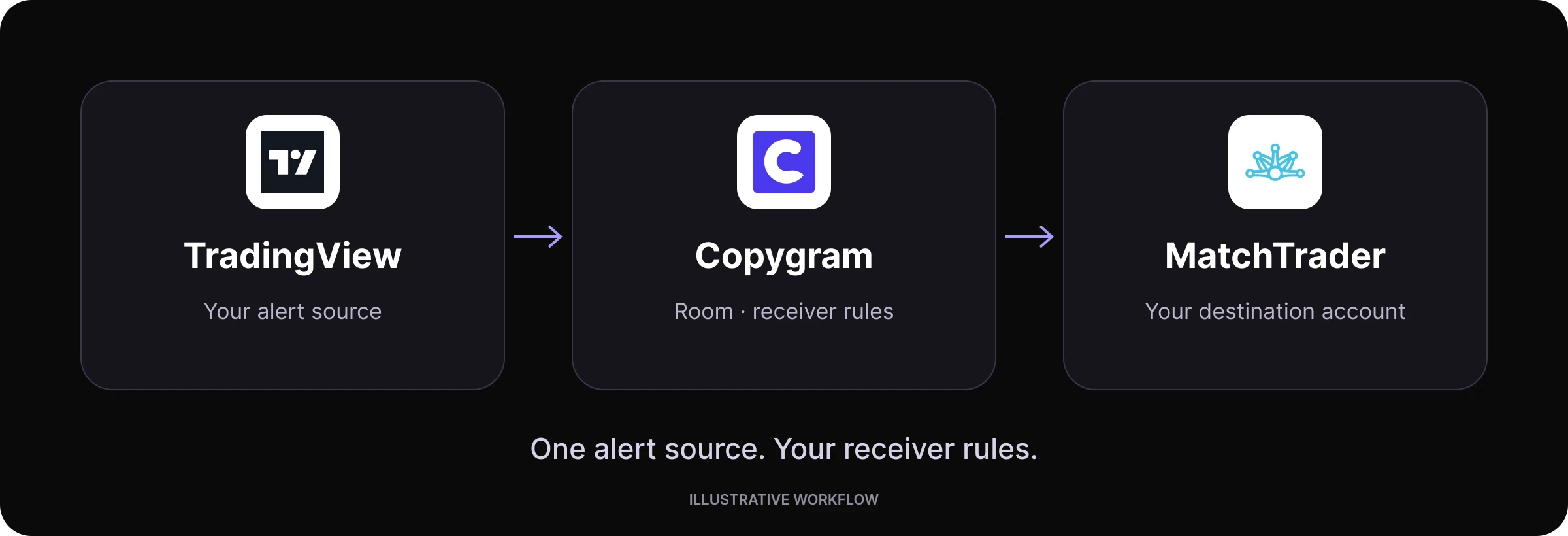
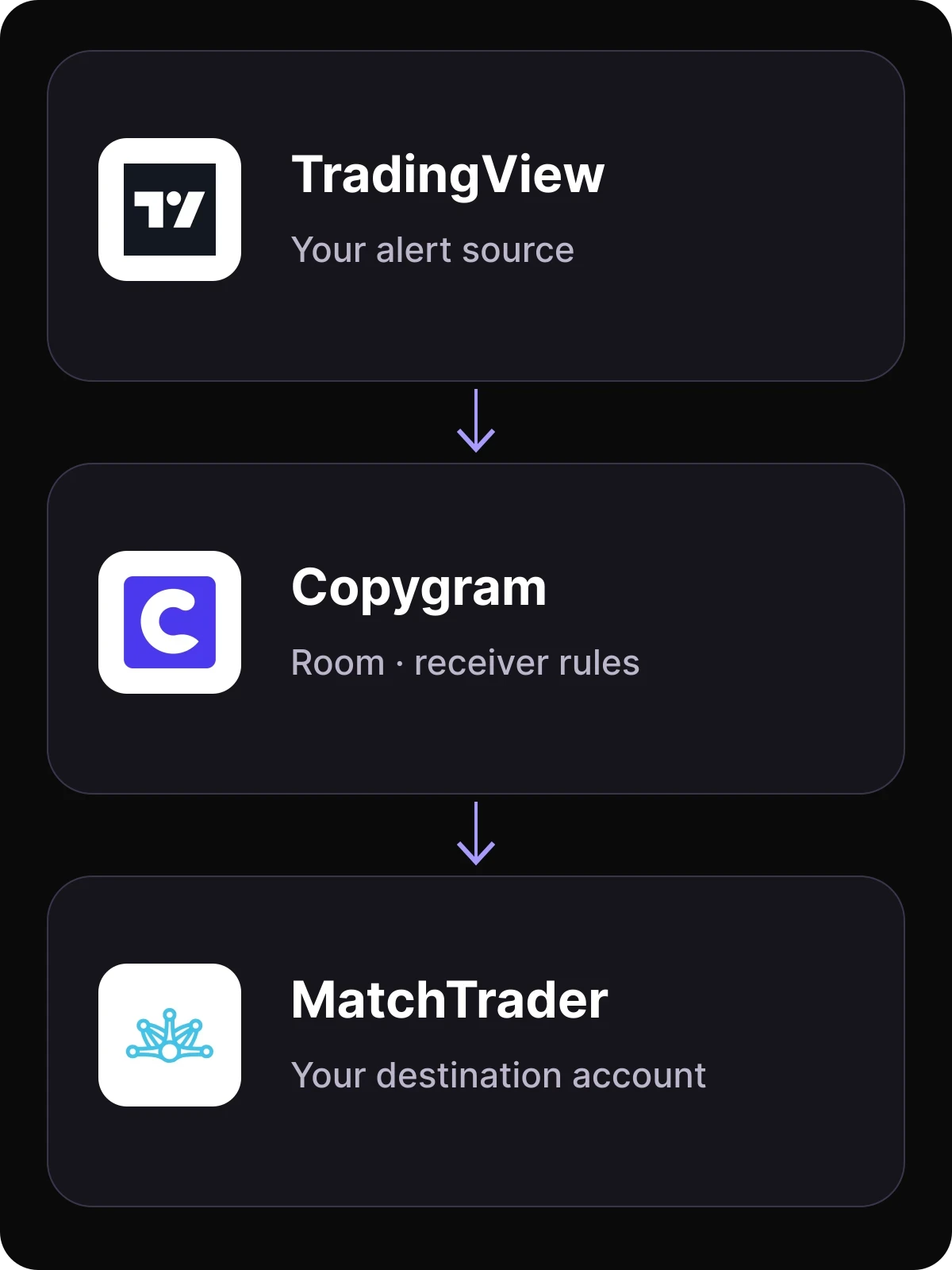
TradingView alert → Copygram webhook and receiver rules → your MatchTrader account.
The workflow explained
What is a TradingView to MatchTrader trade copier?
TradingView supplies the alert. Copygram applies your receiver rules. MatchTrader receives the order.
A TradingView to MatchTrader trade copier turns webhook alert messages into instructions for a connected MatchTrader account. Copygram receives the alert, interprets its action and applies your room’s symbol mapping, position sizing and trade-management settings.
Create a TradingView connector as the room’s source and add MatchTrader as a receiver. Use a TradingView plan with webhook notifications and two-factor authentication enabled. Your indicator or strategy supplies the alert logic; each receiver keeps its own settings.
How it works · step by step
Connect TradingView to MatchTrader in five steps
Connect the account, create a webhook source, configure your alert and receiver, then activate the room.
01
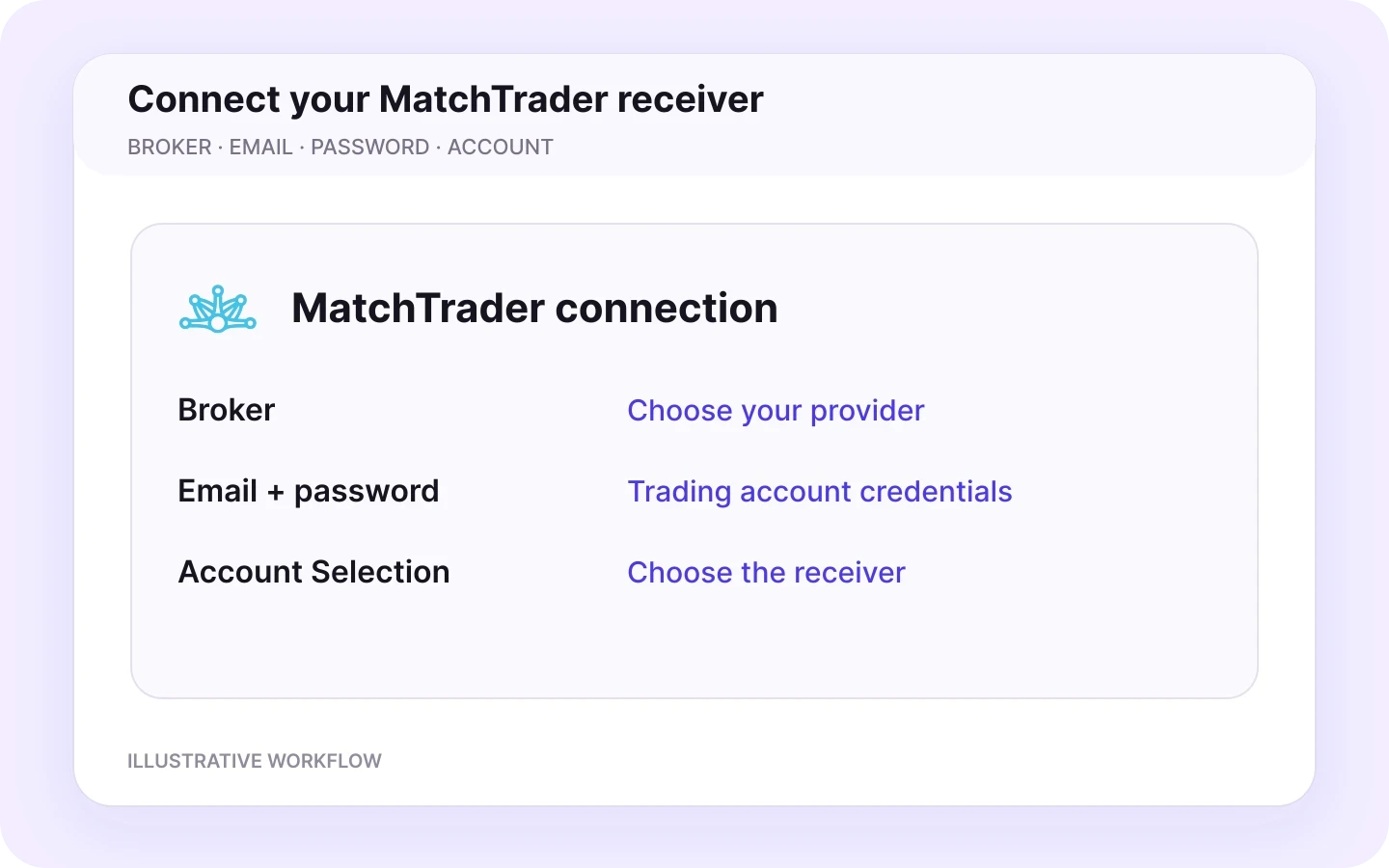
1. Connect your MatchTrader account
In Copygram, add a trading account and choose MatchTrader. Select your Broker, enter your trading Email and Password, then use Account Selection to choose the receiver. Demo and live accounts use the same connection workflow.
02
2. Create a webhook source and room
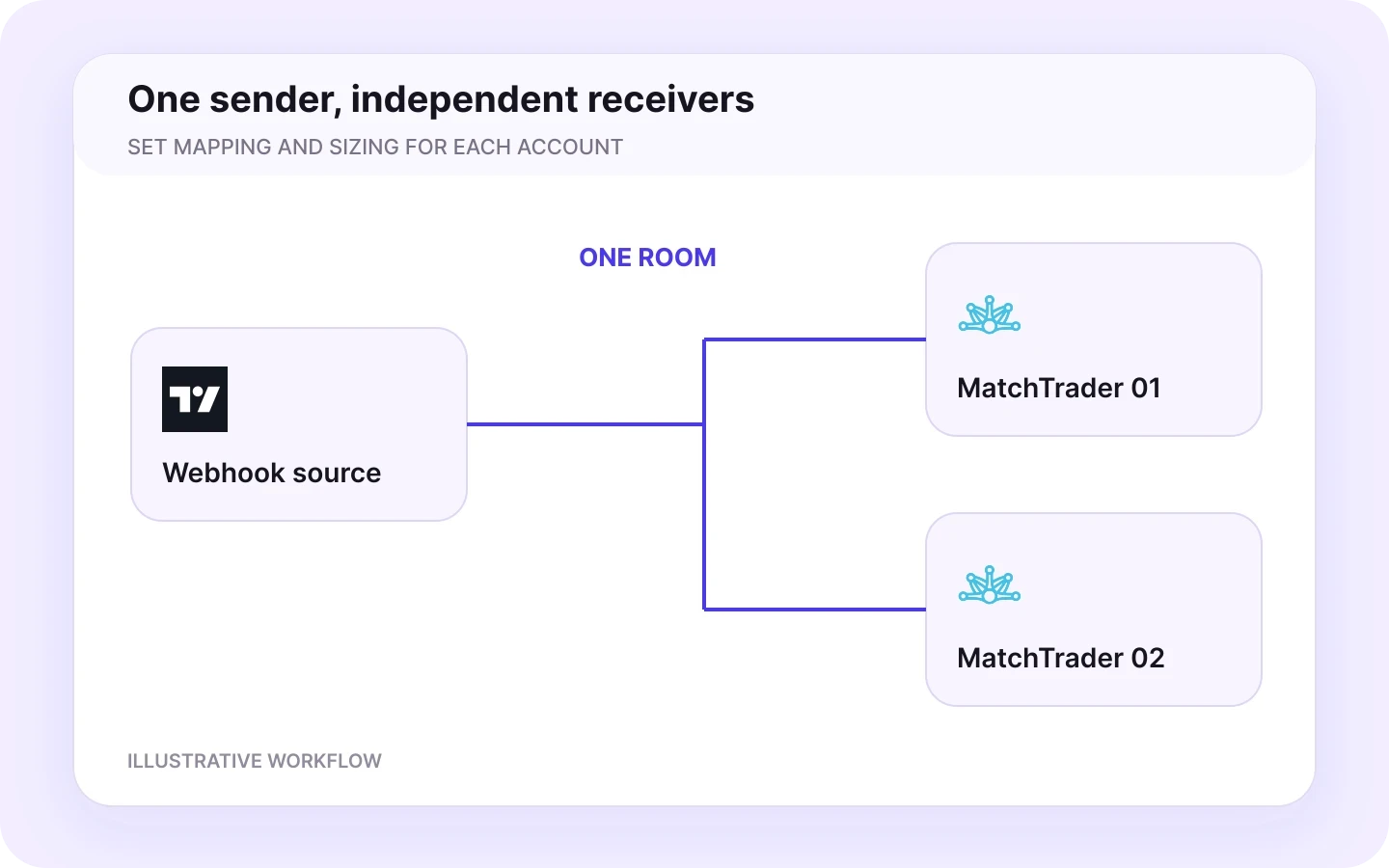
Open Connectors → TradingView in Copygram and create your webhook URL. Choose that connector as the room’s source and add MatchTrader as a receiver. Configure each additional receiver independently.
03
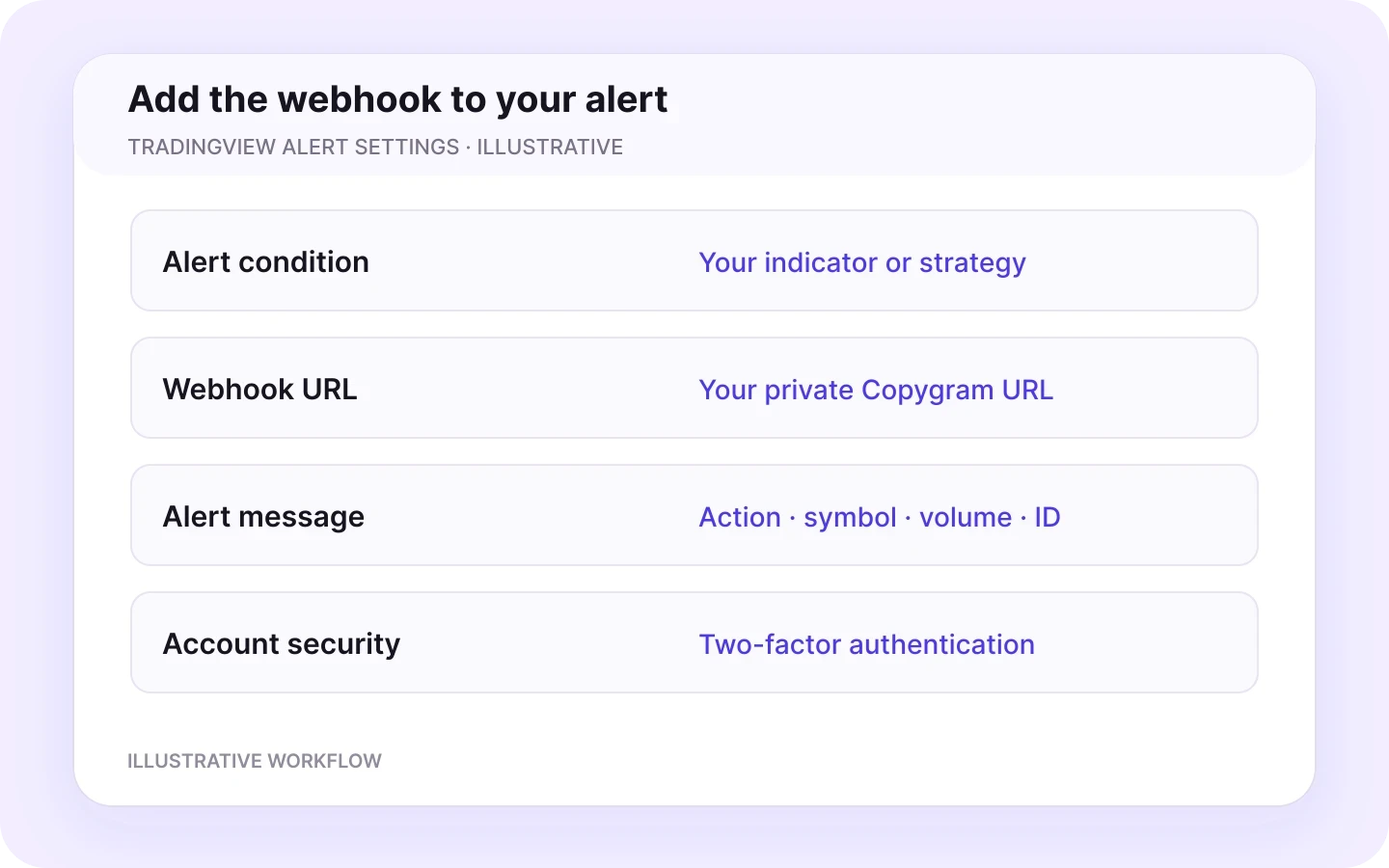
3. Add the webhook to a TradingView alert
Create an alert for your indicator or strategy event. Add the Copygram URL to the Webhook URL field and enter an actionable trade message. Enable two-factor authentication and use a TradingView plan with webhook notifications.
04
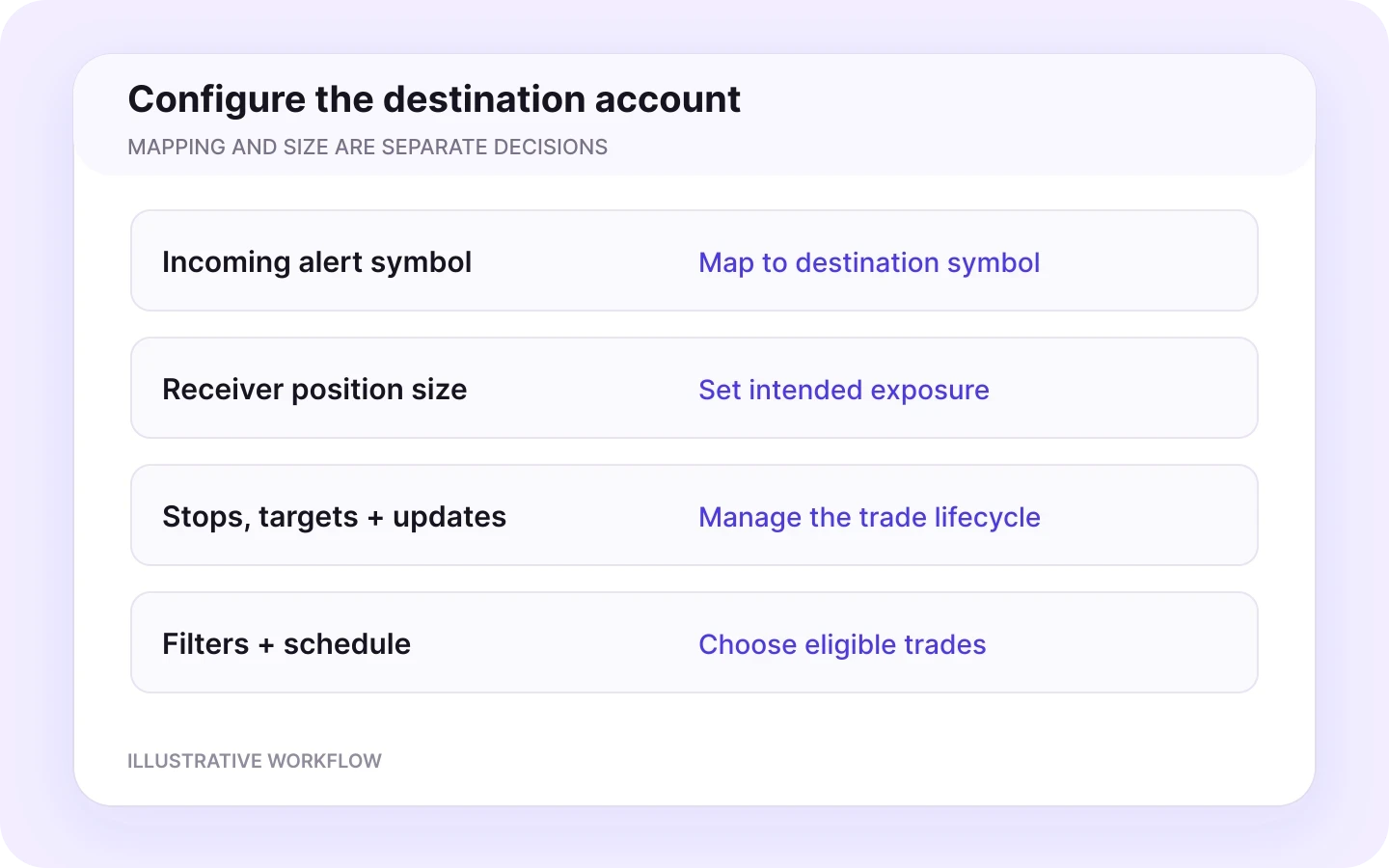
4. Configure the MatchTrader receiver
Map symbols, set receiver sizing and review symbol-specific lot exceptions. Choose stops, targets, multiple take-profit allocations, close and modification controls, then define your filters and trading schedule.
05
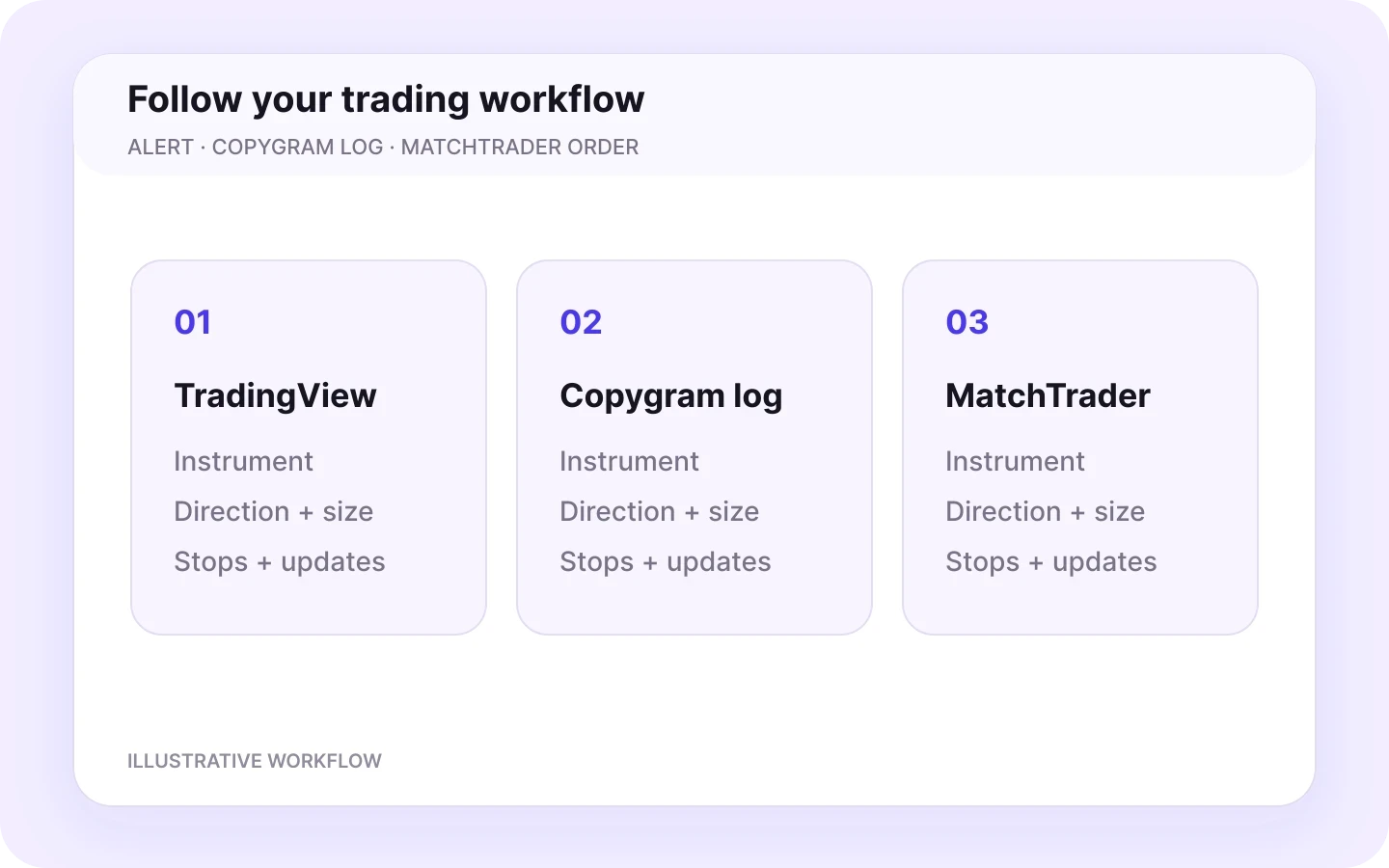
5. Activate and follow your alerts
Activate your room to route TradingView alerts to your demo or live MatchTrader account. Follow the alert, Copygram log and resulting order. Keep the original signal_id in later alerts that manage the same trade.
Indicators, strategies and Pine
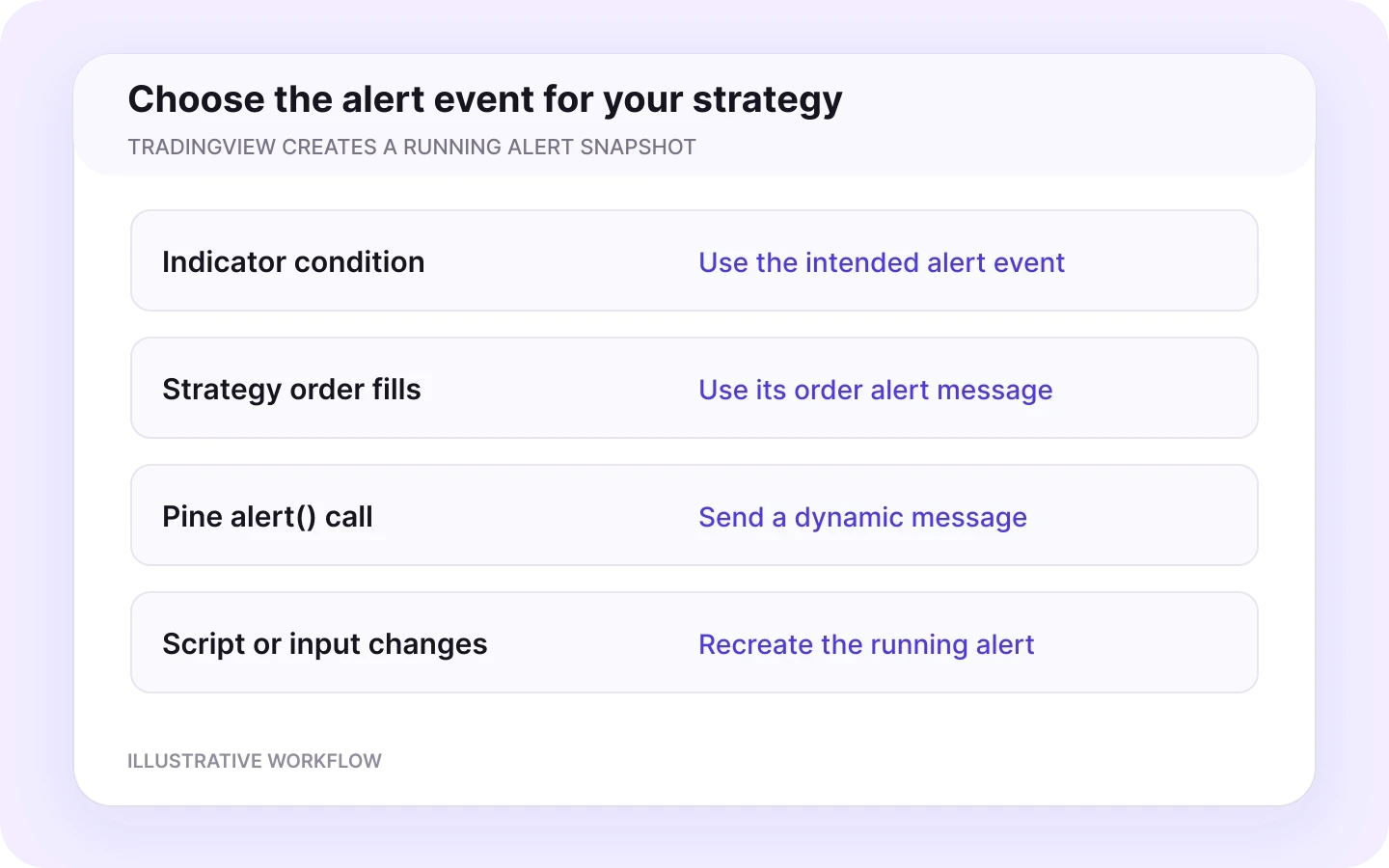
Choose the alert event for your strategy
Keep your trading logic on TradingView. Send the event and message that describe the action you want MatchTrader to follow.
Indicator alerts
Choose an alert condition supplied by your indicator and provide a clear trade message. Add the private Copygram webhook URL to that alert’s notification settings.
Strategy order-fill events
For strategy order events, use the message supplied by your Pine strategy. TradingView supports {{strategy.order.alert_message}} in the alert’s Message field.
Dynamic alert() messages
Pine alert() calls can build dynamic trade instructions. Choose the alert event that represents your intended action so the same trade does not produce overlapping instructions.
Keep the running alert current
TradingView saves a snapshot when an alert is created. Recreate the alert after changing the relevant script, inputs or chart context, and retire the previous alert when it should stop.
TradingView runs active alerts on its servers. Copygram receives the webhook in the cloud, so your browser and a personal VPS do not need to stay running.
Symbol mapping
Map TradingView symbols to MatchTrader
Connect the exact source symbol to your broker’s destination instrument, including any naming prefixes or suffixes.
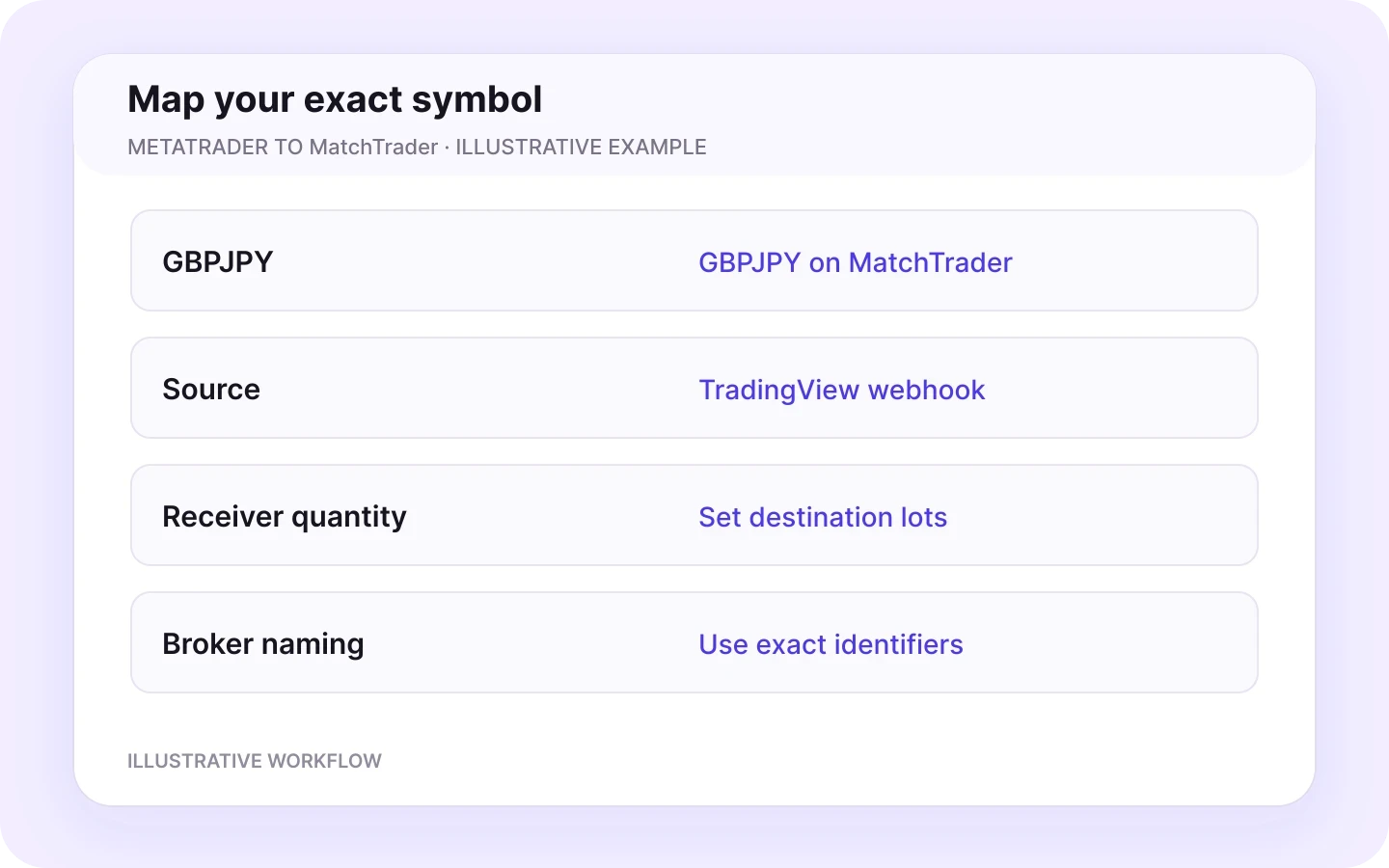
GBPJPY → your MatchTrader symbol
Map the instrument named in your TradingView message to the exact MatchTrader symbol. If your broker uses a prefix or suffix, include it in the destination mapping.
Use the receiver’s exact instrument
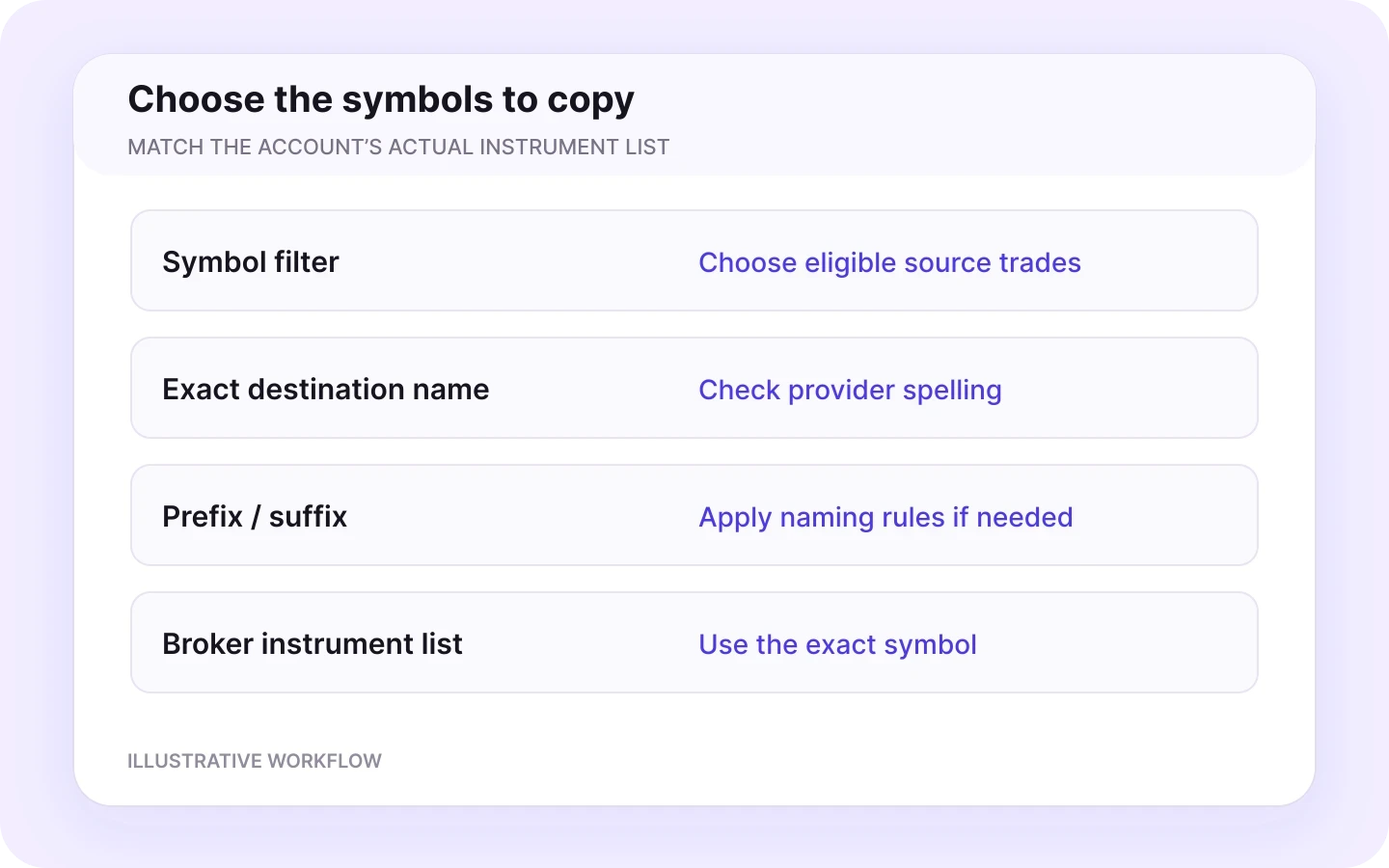
Select the matching market from your MatchTrader instrument list. Use its actual symbol name, price scale and contract specifications.
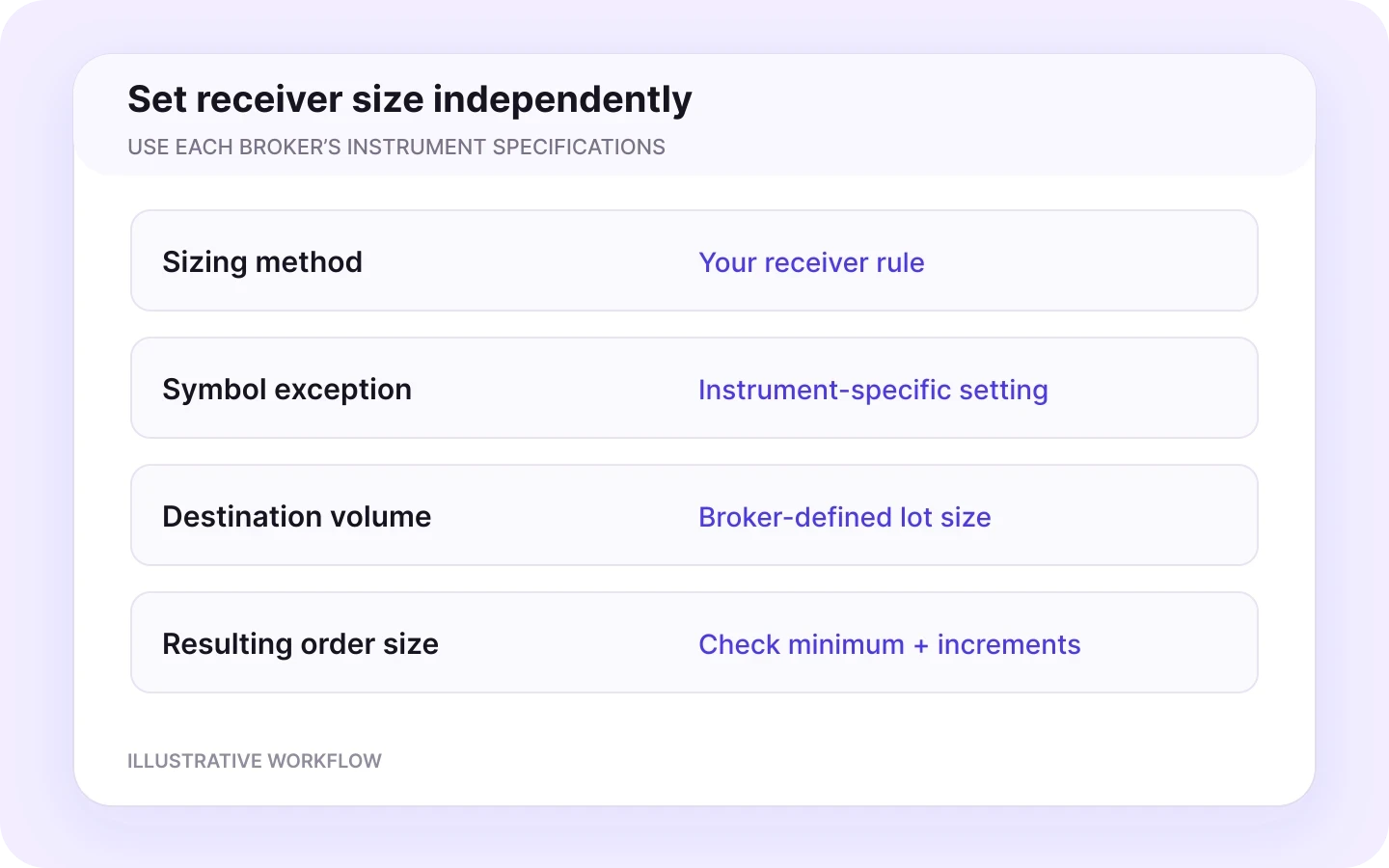
Set volume independently
The documented alert volume is expressed in lots. Your receiver sizing mode and symbol-specific lot exceptions determine the size used by each MatchTrader account.
Apply your symbol rules
Combine mapping with symbol filters to choose which TradingView instructions the receiver follows. Configure each account for the instruments you automate.
GBPJPY is an illustrative symbol. Use the instrument names and specifications on your connected account.
Webhook messages and trade identity
Open and manage a trade with the same signal_id
Use clear fields for the trade instruction. Reuse the opening alert’s identifier for later modifications and targeted closes.
Opening alert
Later stop-loss update
Same trade. Same signal_id.
action / order_type
Describe the intended opening or management action, direction and order type.
symbol
Name the incoming instrument. Symbol mapping connects it to the receiver’s exact instrument.
volume
Express volume in lots in the documented message format. Receiver sizing rules and lot exceptions apply independently.
entry
Include an entry price when it is relevant to the instruction, such as a pending order.
sl / tp
Use price levels for stop loss and take profit. Configure multiple take-profit behavior in your receiver settings.
signal_id
Assign an original ID to each new trade. Reuse that ID when a later alert modifies or closes that specific trade.
Keep the original trade ID
The opening alert defines signal_id. A follow-up instruction for that trade uses the same ID; each new trade gets its own ID.
Clear fields, flexible parsing
Copygram interprets the message’s intent without requiring one rigid JSON schema. Explicit fields make your instructions easier to read and manage.
The symbol, volume, prices and ID above are illustrative configuration values, not current market instructions. Select and copy the text, then use values from your own strategy.
MatchTrader receiver controls
Control how MatchTrader receives your alerts
Give every receiver its own mapping, sizing and trade-management rules. Configure how the same TradingView source is handled by each connected account.
Money management and symbol exceptions
Choose fixed-size, multiplier, balance-based or risk-based receiver sizing. Symbol-specific lot exceptions take priority over general money-management settings.
Receiver sizing
Symbol exceptions
Check exposure
Symbol filters and naming rules
Map incoming TradingView symbols to exact MatchTrader instruments. Apply prefix or suffix rules and symbol filters to define the instructions each receiver follows.
Eligible symbols
Exact mapping
Symbol suffixes
Stops and targets for the destination
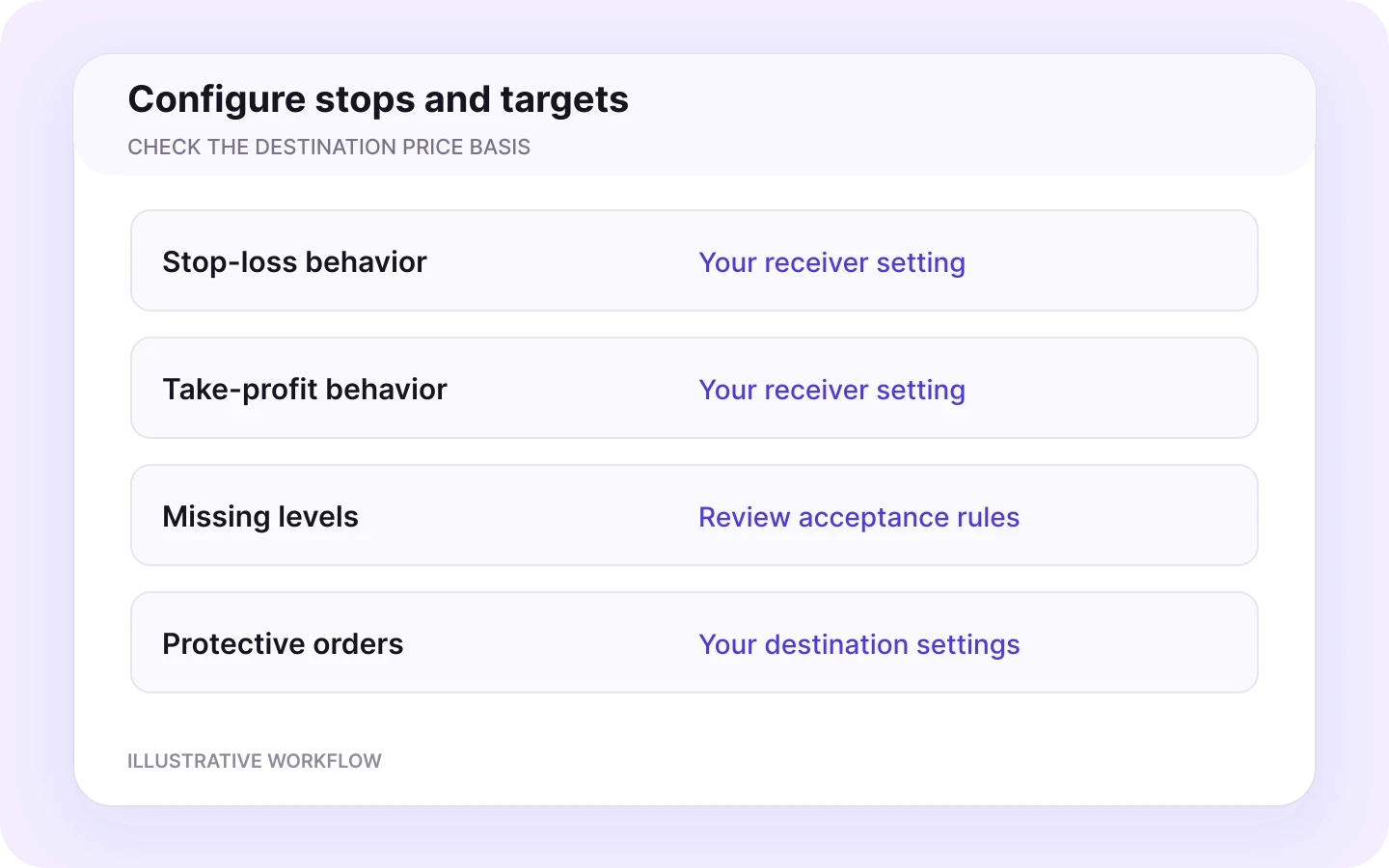
Configure stop-loss and take-profit behavior, including whether to accept an instruction without those levels. Set protective orders using the destination instrument’s price basis and your receiver settings.
Stop loss
Take profit
Destination prices
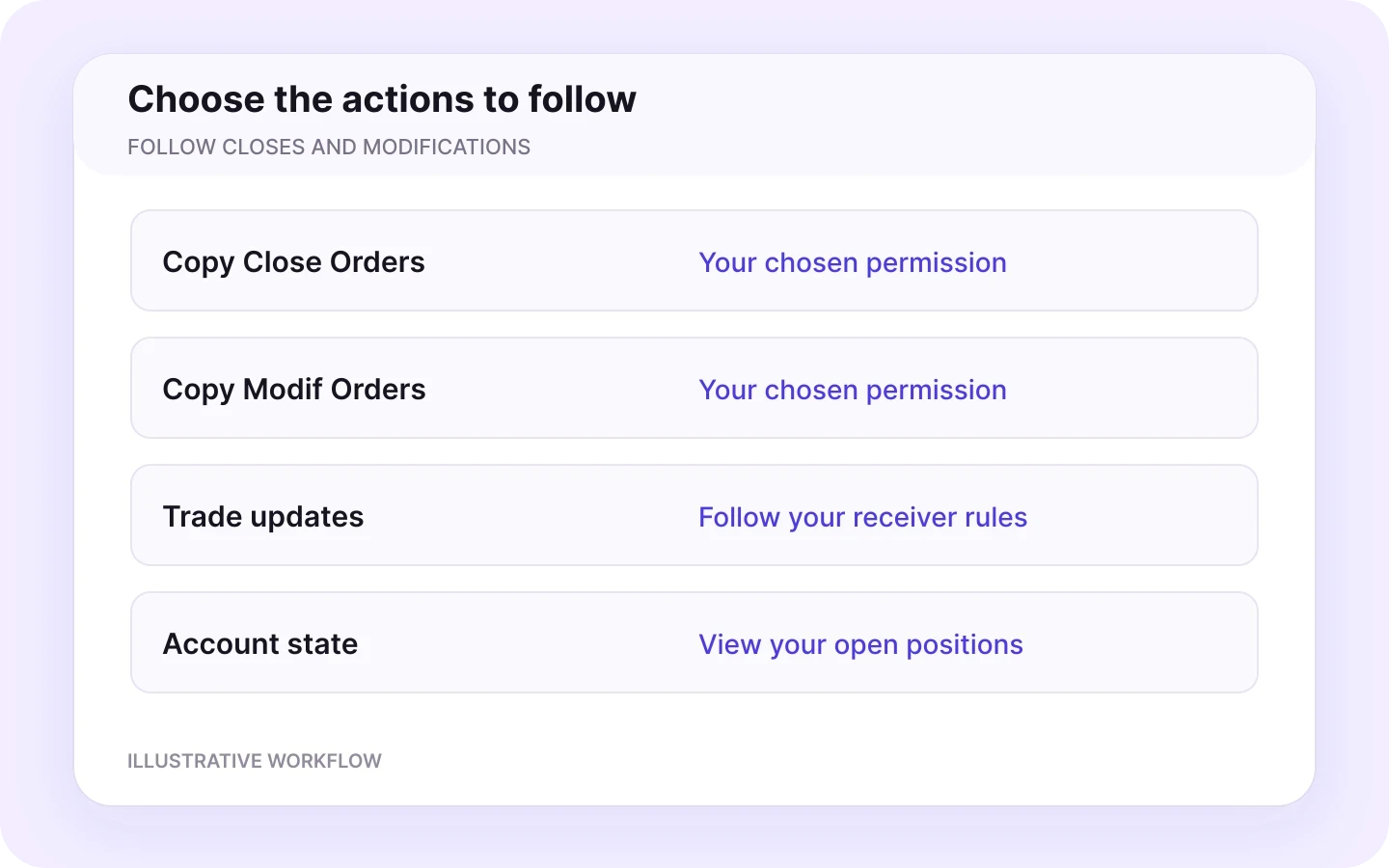
Close and modification controls
Enable Copy Close Orders and Copy Modif Orders for the actions you want to follow. Reuse the original signal_id in targeted management alerts. Close opposite orders is a receiver setting.
Close permissions
Trade modifications
Full lifecycle
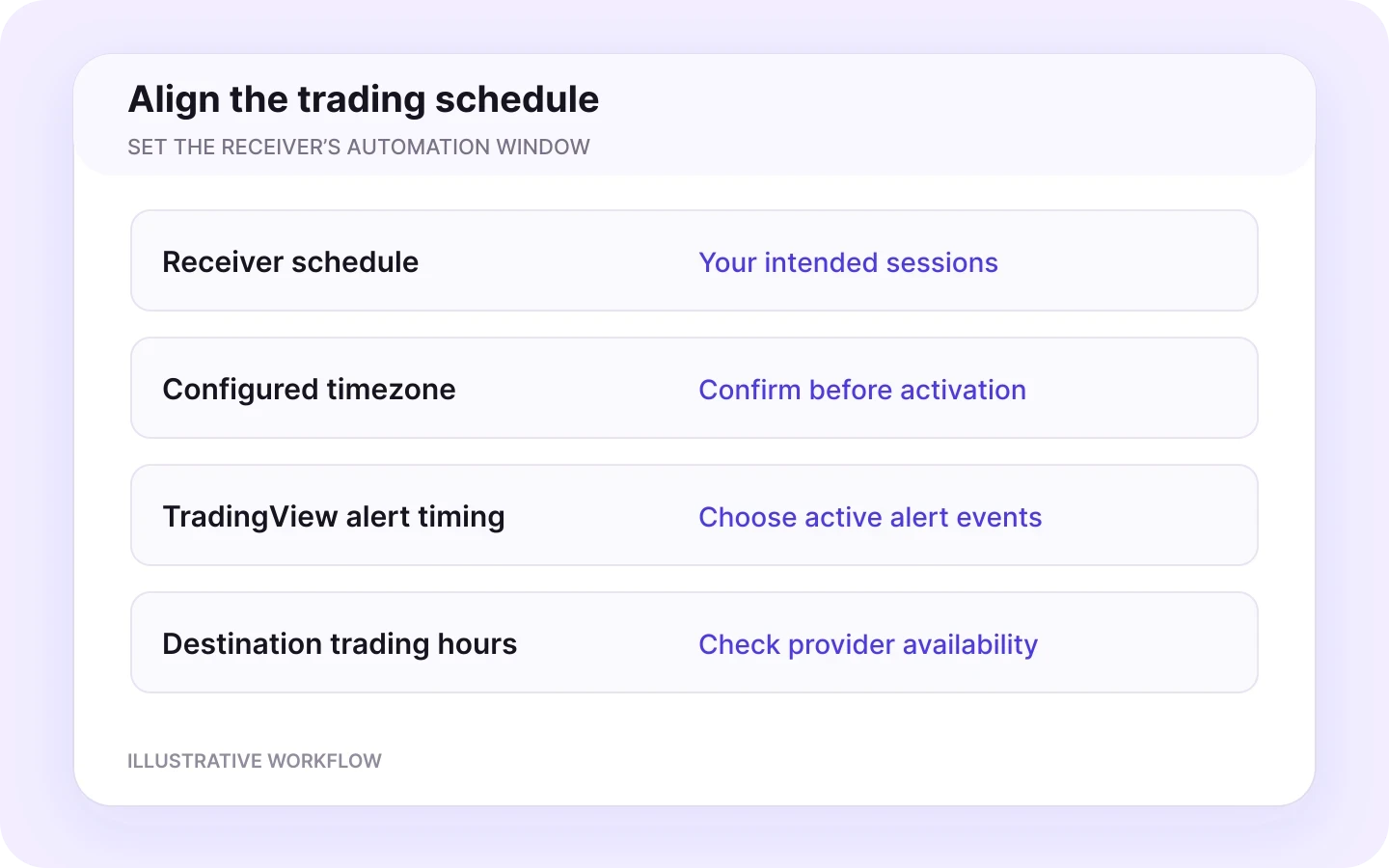
Trading schedule and timezone
Choose your receiver’s schedule and timezone. Align the automation window with the market sessions and TradingView alert events you want to follow.
Trading schedule
Timezone
Market hours
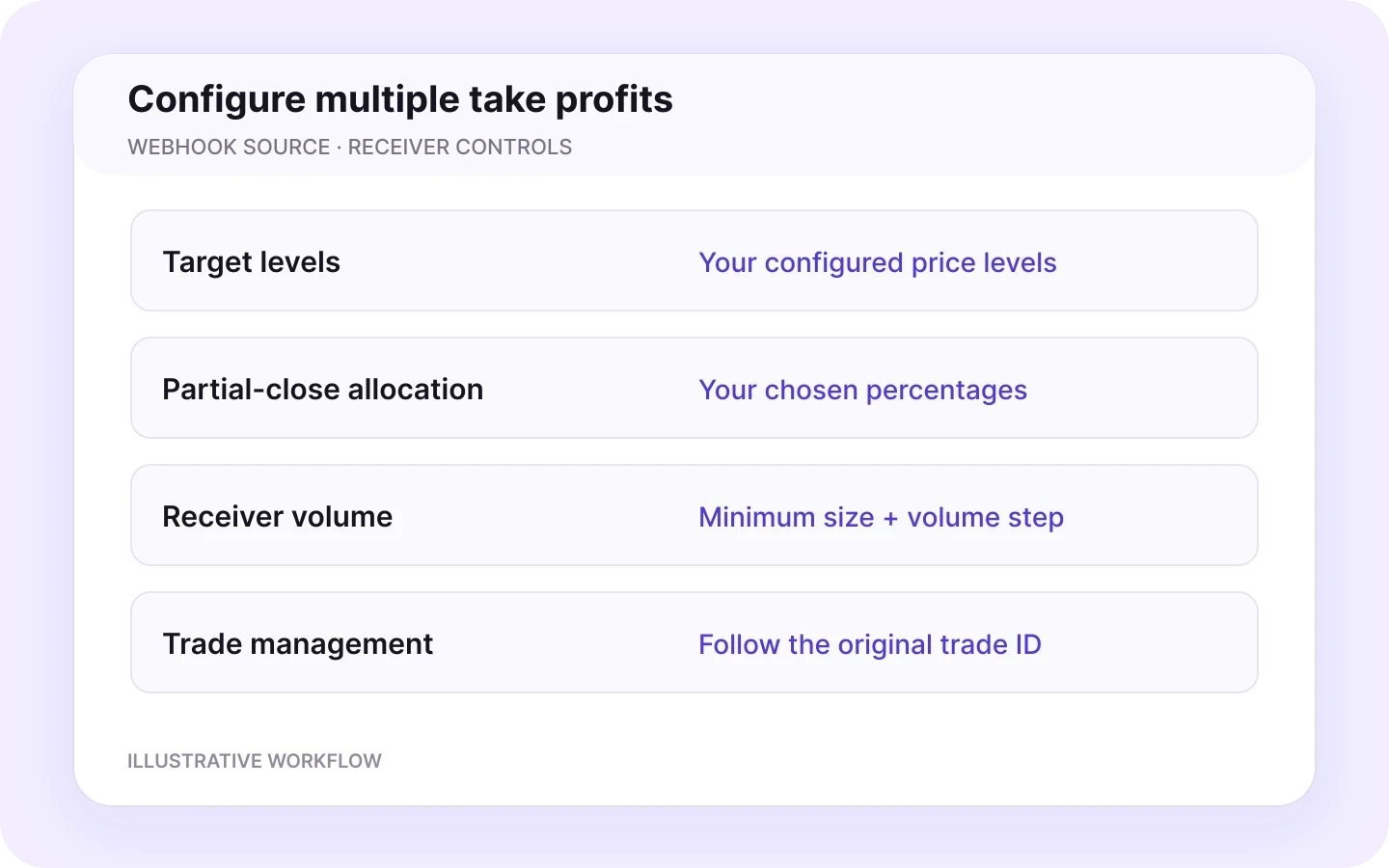
Multiple take-profit controls
Set multiple take-profit levels and percentage-based partial-close allocations for webhook signals. Configure the allocations using your MatchTrader instrument’s minimum volume and volume step.
Partial-close allocations
Your allocation
Volume steps
Monitor your automation
Follow the alert from TradingView to MatchTrader
Use your TradingView alert log, Copygram room and receiver history to follow the complete automation workflow.
TradingView alert source
Manage your active TradingView alerts and Copygram webhook connector. Review the selected condition, webhook URL and message for the instruction being sent.
MatchTrader receiver
Manage the selected MatchTrader broker, trading-account connection and receiver. Keep each account’s mapping, sizing and management settings in its Copygram room.
Room activity
Follow the webhook source, connected receivers and room activity in Copygram. Keep the room active to route your TradingView instructions automatically.
Filters and schedule
Review symbol filters, the trading schedule and optional AI Trade Validation if enabled for your receiver.
Symbol mapping and size
Follow the incoming symbol, mapped MatchTrader instrument, resulting order size and protective levels in the trade records.
Entries, closes and updates
Use the original signal_id to follow a trade’s opening, modifications and closes alongside the receiver settings applied by Copygram.
Keep your automation in view
Follow the TradingView alert log, Copygram processing log and MatchTrader account history to see the complete alert-to-order workflow.


More TradingView integrations
Explore more TradingView integrations
Connect your TradingView alerts to other platforms with dedicated guides for webhook setup, mapping and receiver settings.



TradingView to NinjaTrader
Send TradingView alerts to NinjaTrader futures accounts with independent contract and receiver settings.

TradingView to MetaTrader
Send TradingView alerts to MetaTrader with independent receiver settings.

TradingView to Tradovate
Send TradingView alerts to Tradovate with independent receiver settings.

TradingView to TradeLocker
Send TradingView alerts to TradeLocker with independent receiver settings.

TradingView to Binance Futures
Send TradingView alerts to Binance Futures with independent receiver settings.

TradingView to OANDA
Send TradingView alerts to OANDA with independent receiver settings.

TradingView to DXtrade
Send TradingView alerts to DXtrade with independent receiver settings.
FAQ
TradingView to MatchTrader: frequently asked questions
Answers about webhooks, Pine alerts, trade identifiers and MatchTrader receiver controls.
Can TradingView alerts place trades on MatchTrader?
Yes. Copygram receives TradingView webhook alerts and routes trade instructions to your connected MatchTrader receiver. Set symbol mapping, position sizing and trade-management controls for the account. Demo and live accounts are supported.
How do I connect TradingView to MatchTrader?
Connect MatchTrader in Copygram, create a webhook under Connectors → TradingView and use that connector as the source of a room. Add MatchTrader as a receiver, paste the webhook URL into your TradingView alert and configure the alert message and receiver settings. Activate the room to begin automation.
Which TradingView plan and settings do I need?
Use a TradingView plan that includes webhook notifications and enough alerts for your strategy. Enable two-factor authentication on TradingView and add your private Copygram webhook URL to the alert’s notification settings.
Do I need to write Pine Script?
You can use an existing indicator or strategy that supplies suitable alert events and an actionable message. Pine Script lets you define custom alert logic and dynamic messages. Choose the event that represents your intended trade instruction.
Do webhook alerts need my computer or a VPS to stay on?
TradingView runs active alerts on its servers, and Copygram handles webhook routing in the cloud. Your browser and a personal VPS do not need to remain running for this webhook workflow. Keep your alerts active and your account connections configured.
What MatchTrader details does Copygram request?
Select your Broker, enter your trading Email and Password, then use Account Selection to choose the MatchTrader receiver. Enter these details in Copygram’s account connection flow. Your TradingView alert message contains trade instructions, not account passwords.
What should a TradingView webhook message contain?
Include a clear action, order type, symbol and volume. The documented volume is in lots; entry, stop-loss and take-profit values are prices. Add signal_id when later alerts will manage the trade. Copygram uses intent-based parsing without requiring one rigid JSON schema.
How do I use signal_id for modifications and closes?
Assign an original signal_id when opening a trade and reuse it in every later alert that modifies or closes that specific trade. Give each new trade its own ID and enable the corresponding close and modification controls in the receiver settings.
Can I configure multiple take-profit levels?
Yes. Copygram provides multiple take-profit controls for webhook sources, including percentage-based partial-close allocations. Configure the targets and allocations using your MatchTrader instrument’s minimum volume and volume step.
How do symbol mapping and receiver sizing work?
Map the TradingView message’s symbol to the exact MatchTrader instrument. Set fixed-size, multiplier, balance-based or risk-based receiver sizing as needed. Symbol-specific lot exceptions take priority over general money-management settings, so each receiver can use its own instrument rules.
How should I configure Pine strategy alerts?
Choose the order-fill event or alert() call that represents the instruction you want to send. For strategy order messages, TradingView supports {{strategy.order.alert_message}} in the alert Message field. Recreate the running alert after changing the relevant script, inputs or chart context.
Can one TradingView source send trades to multiple MatchTrader accounts?
Yes. A Copygram room connects one TradingView source to one or more receivers within your plan’s allowance. Add each MatchTrader account as a receiver and give it independent mapping, sizing, trade-management and scheduling settings.