Drawdown Limits vs Balance in Risk Settings: Why Equity Must Lead Your Forex Risk Management
Education
Discover the crucial differences between drawdown limits based on balance vs equity in forex trading. Learn why true risk management relies on equity, understand floating loss, and see Copygram’s advanced settings in action. Essential reading for every trader.

Introduction: Why Does Drawdown Management Matter in Forex?
In the high-stakes world of forex trading, protecting your capital is just as critical as making profitable trades. But what truly stands between your account and catastrophic loss? One of the most misunderstood factors for new and veteran traders alike is the proper use and understanding of drawdown limits — especially the difference between setting these limits based on your account balance or on your current equity.
This guide will zero in on the mechanics of balance vs equity forex risk settings, explain why equity-based drawdowns are the gold standard, and show you how platforms like Copygram empower you to manage risk with professional precision.
We’ll answer the burning questions traders have: What happens to open trades during a drawdown? Why is floating loss the real risk? How do you set foolproof limits in Copygram? And much more. Let’s unlock the secrets to real account protection!

A modern visualization comparing static balance and dynamic equity in forex trading risk settings.
Balance vs Equity: The Core Difference Every Trader Must Understand
Let’s break down the critical concepts:
Term | Definition |
|---|---|
Balance | Total amount in your account AFTER all trades have been closed (does not reflect open gains/losses). |
Equity | Your current balance PLUS or MINUS the gain/loss from all open trades — the true live value of your account. |
Floating Loss | Unrealized (not yet closed) losses from currently open trades — can quickly erode your real account value. |
TL;DR: Balance is like your account’s historical snapshot, while Equity shows your actual financial health at any moment.
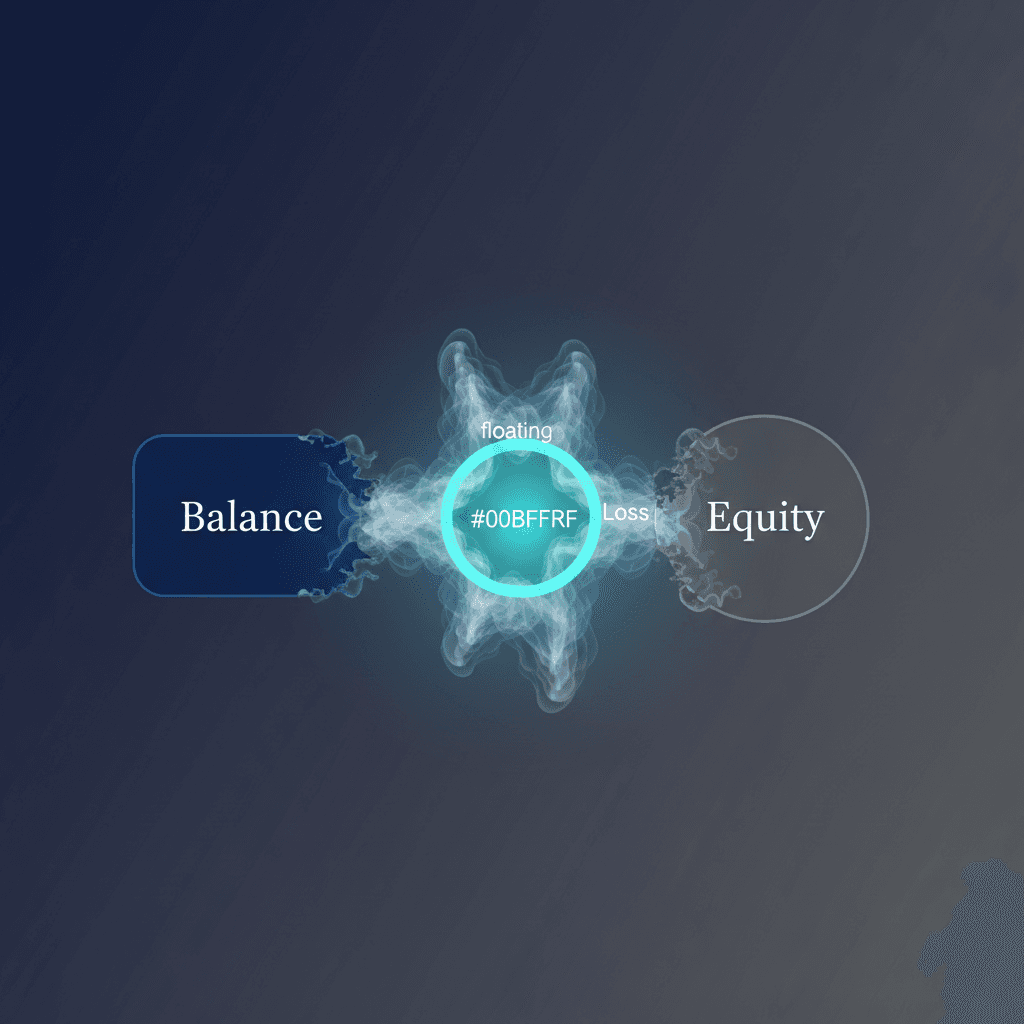
A minimalist diagram illustrating the invisible risk of floating loss between balance and equity.
🚦 Visualizing Floating Loss: Why Balance Doesn’t Tell the Whole Story
Imagine you have a $10,000 account. If every trade is closed, your balance and equity match — life is simple. But what happens if you have
open trades running at a loss? Your balance might still show $10,000, but your equity could be $9,000… or even lower!
Balance is blind to open trades — it only updates after closing trades.
Equity is always live, factoring in wins and losses from current trades (the reality check every trader needs!).
Floating loss is the silent killer: open drawdowns can wipe out your account before your balance even updates.
This is why managing drawdown based on equity is the only way to ensure your account is truly protected in real-time!

A precision schematic contrasting robust equity-based protection with vulnerable balance-based limits.
Why True Risk Management Must Be Equity-Based (and Not Balance-Based)
Here’s where the debate ends: risk based on equity is always superior to risk limits based on balance.
Balance-based drawdown: Only responds after a position is closed — potentially too late to save your account in fast-moving markets.
Equity-based drawdown: Responds instantly to open losses — actively limits risk and protects your capital, even during sudden market reversals.
Most professional traders, fund managers, and proprietary trading firms require all risk-limiting technology to work off equity, never balance.
💡 Key Takeaway
Only equity-based drawdown can halt disastrous losses in real-time. If you’re serious about capital protection, always set your risk rules on equity — not balance!
Copygram’s Advanced Equity Drawdown Controls in Action
Copygram gives you enterprise-grade risk tools for drawdown protection. Here’s how to put them to work:
Set master or slave drawdown limits by percentage or fixed currency value based on:
• Equity (recommended)
• Balance (not recommended)Activate ‘Stop All’ on Drawdown: Instantly closes all open trades and/or stops future copying when equity limit is breached.
Customize per account group: Tailor risk settings precisely to different client or strategy profiles.
Real-time monitoring: The Copygram dashboard tracks live equity, balance, floating PL, and drawdown across all linked accounts. No more guesswork!
For an in-depth look and advanced strategies, visit Education Advanced Risk Management Protect Capital Copygram and Education Mastering Drawdown Trade Copier Prop Firm Risk.
FAQs: People Also Ask About Balance, Equity, and Drawdown Management
❓ What’s more important: balance or equity for risk?
Equity. Balance is historic; equity is what you have now. Always manage risk on live figures. ❓ How does floating loss destroy accounts?
Floating loss is unrealized. A large open loss can drain your real account value before your balance updates — leading to margin calls or forced liquidations. Ignoring it is a recipe for disaster. ❓ Can copy trading platforms protect against open drawdowns?
Only if they have equity-based drawdown protection — like Copygram’s ‘Stop All’ and live limit tools. ❓ How do prop firms enforce risk?
They force equity-based drawdown limits as a condition for keeping your funded account. ❓ Where can I learn more about best risk settings for trade copiers?
This in-depth guide is a must-read: Education Fixed Lot Vs Equity Vs Balance Multiplier Best
🚀 Final Thoughts: Upgrade Your Risk Management Today
If you’re still managing risk by balance alone, it’s time for an upgrade. Make equity your metric, unlock professional-level protection, and take full control with Copygram’s advanced suite of settings.
For more guides, check out Education Advanced Risk Management Protect Capital Copygram and Education Mastering Drawdown Trade Copier Prop Firm Risk.

Julian Vance
Julian Vance is an independent writer and quantitative strategist. He writes about trading automation and account-management workflows for Copygram.
Join our newsletter list
Sign up to get the most recent blog articles in your email every week.
Keep learning
More setup guides



Your next step
Find your Copygram workflow
Choose a source, review its supported destinations and follow the connection steps.