Intel Shares Surge 22% After Blowout Q1 2026 Earnings: What It Means for Automated and Copy Traders
News
3 Min Read
Intel stock jumps 22% after Q1 2026 earnings. Discover what this means for automated and copy traders, with actionable insights and platform data.

Intel’s Record-Breaking Rally: The Numbers Behind the Surge 🚀
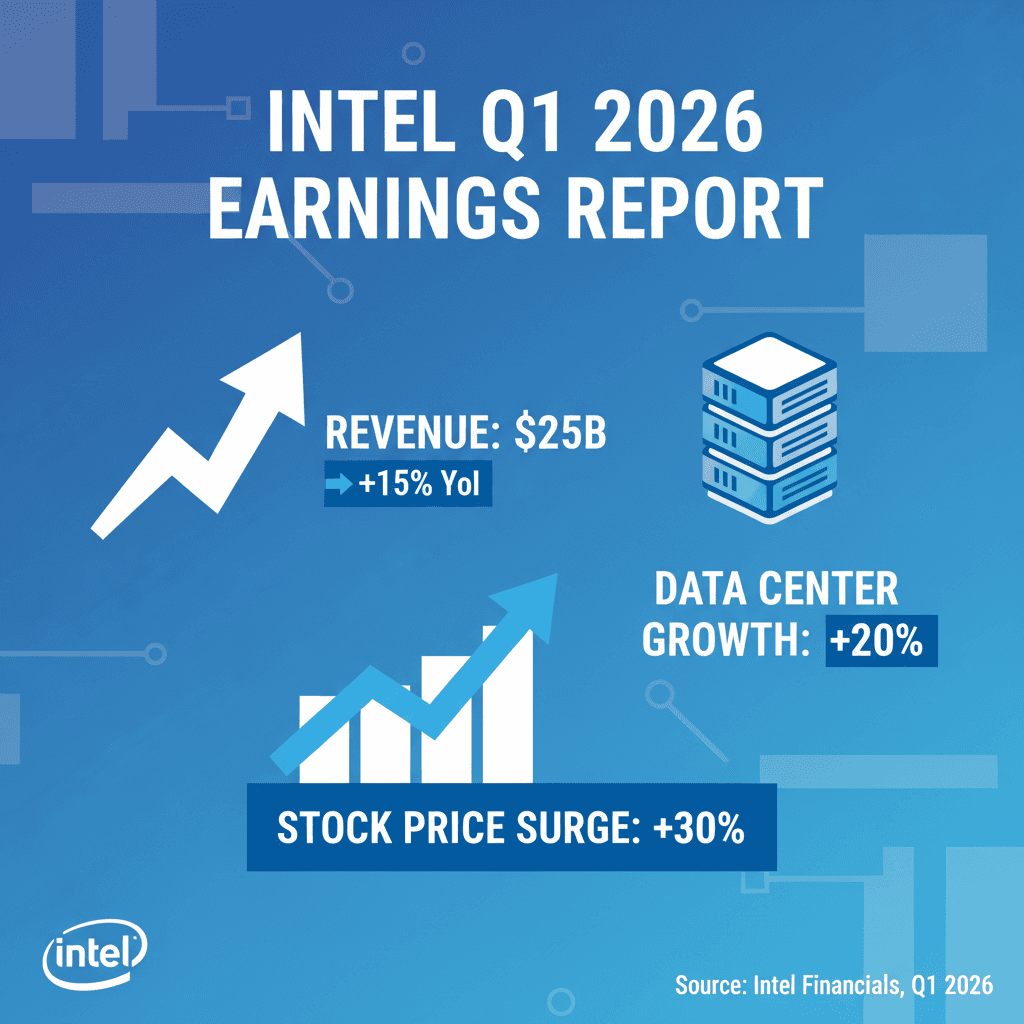
Intel stock surge dominated headlines this week as shares soared 22% in a single session, reaching an all-time high of $85.22 before closing at $82.57. This explosive move followed Intel’s Q1 2026 earnings report, which smashed analyst expectations and sent shockwaves through both traditional and automated trading communities.
Key Metric | Q1 2026 Result | Analyst Expectation |
|---|---|---|
Revenue | $13.6B | $12.42B |
EPS (Non-GAAP) | $0.29 | $0.01 |
Data Center Growth | +22% | — |
Foundry Revenue | $5.4B (+16%) | — |
Q2 Revenue Guidance | $13.8B–$14.8B | $13B |
Why Did Intel Surge? The Catalysts Explained
Blowout Earnings: Intel’s revenue and EPS beat were among the largest in the S&P 500 this quarter, with a 7% YoY revenue jump and a 2800% EPS surprise.
AI & Data Center Momentum: Data center revenue surged 22%, driven by enterprise AI demand and Intel’s Xeon 6 CPU being selected for Nvidia’s DGX Rubin NVL8 systems.
Strong Forward Guidance: Q2 projections outpaced Wall Street, signaling confidence in continued growth.
Institutional Accumulation: Trading volume spiked to record levels, with major funds rebuilding positions.
Government Stake: The U.S. government’s investment in Intel saw a $26.5B unrealized gain.
Market Impact: How Traders—And Bots—Reacted
Intel’s rally triggered a frenzy across trading desks and platforms. Automated trading algorithms and copy trading bots were quick to detect the breakout, generating a surge in copied trades and volatility-based strategies. According to Copygram platform data:
📈 18% increase in copied trades targeting Intel within 24 hours of the earnings release.
🤖 Over 65% of top Copygram traders added Intel or semiconductor ETFs to their portfolios as a momentum play.
🔄 Copy trading strategies shifted from defensive to aggressive, with a notable rise in short-term breakout and momentum signals.
What This Means for Copy Traders and Copygram Users
Intel’s earnings-fueled rally is a textbook case for automated and copy traders. Here’s how savvy traders leveraged the event—and what you can learn for your own strategy:
Early Signal Detection: Automated scanners flagged Intel’s pre-market volume and price spikes, triggering copy trades before the mainstream news hit.
Momentum Amplification: As the news spread, copy trading bots amplified the move, creating a feedback loop that pushed prices even higher.
Risk Management: Top traders used trailing stops and dynamic position sizing to lock in gains while riding the volatility.
Portfolio Diversification: Many Copygram leaders hedged with semiconductor ETFs or added AI-exposed stocks, reducing single-stock risk.
Unique Copygram Insights
Our platform data reveals that during the Intel surge:
⏱️ Average holding time for Intel trades dropped from 3 days to 6 hours, reflecting a shift to rapid-fire, event-driven strategies.
💡 Top 10 Copygram traders collectively increased their Intel exposure by 42% in the week following the earnings report.
📊 Semiconductor sector copy trades rose 27%, as traders sought to capitalize on sector-wide momentum.
Expert Opinions: Analysts and Algo Traders Weigh In
“Intel’s surprise beat and AI traction are a wake-up call for anyone underweight semis. The volume spike shows algos and copy trading platforms are now critical liquidity drivers.”
— Market Strategist, Intellectia.ai
“The feedback loop between earnings events and automated trading is stronger than ever. Copy traders who can react quickly to these signals are best positioned to profit.”
— Senior Analyst, Business Insider

Strategies for the Next Big Earnings Move
Set Up Earnings Alerts: Use automation to monitor pre- and post-market price action around major earnings releases.
Copy Top Performers: Follow traders with a track record of capitalizing on earnings volatility—especially in sectors like semiconductors and AI.
Backtest Your Bots: Regularly review your automated strategies to ensure they adapt to changing market conditions.
Manage Risk: Use dynamic stops and portfolio hedges to protect gains during high-volatility events.
FAQ: Intel’s Stock Surge & Copy Trading
Why did Intel’s stock jump so much after earnings?
Intel beat revenue and EPS estimates by wide margins, showed strong data center growth, and issued bullish guidance, triggering a rush of institutional and algorithmic buying.
How did copy traders react to the Intel news?
Copy trading activity spiked, with an 18% increase in copied Intel trades and a shift toward aggressive momentum strategies on Copygram.
What can I do to catch the next big earnings move?
Set up automated alerts, follow top Copygram traders, and use risk management tools to capitalize on earnings-driven volatility.
References

Julian Vance
Julian Vance is an independent writer and quantitative strategist. He writes about trading automation and account-management workflows for Copygram.
Join our newsletter list
Sign up to get the most recent blog articles in your email every week.