RAVE Token's 11,000% Surge Ends in 95% Crash: Manipulation Claims & Copy Trading Lessons
News
3 Min Read
RAVE token soared 11,000% before crashing 95%. Explore manipulation claims, exchange probes, and vital lessons for copy and automated traders.
Introduction: RAVE Token’s Wild Ride 🚀💥
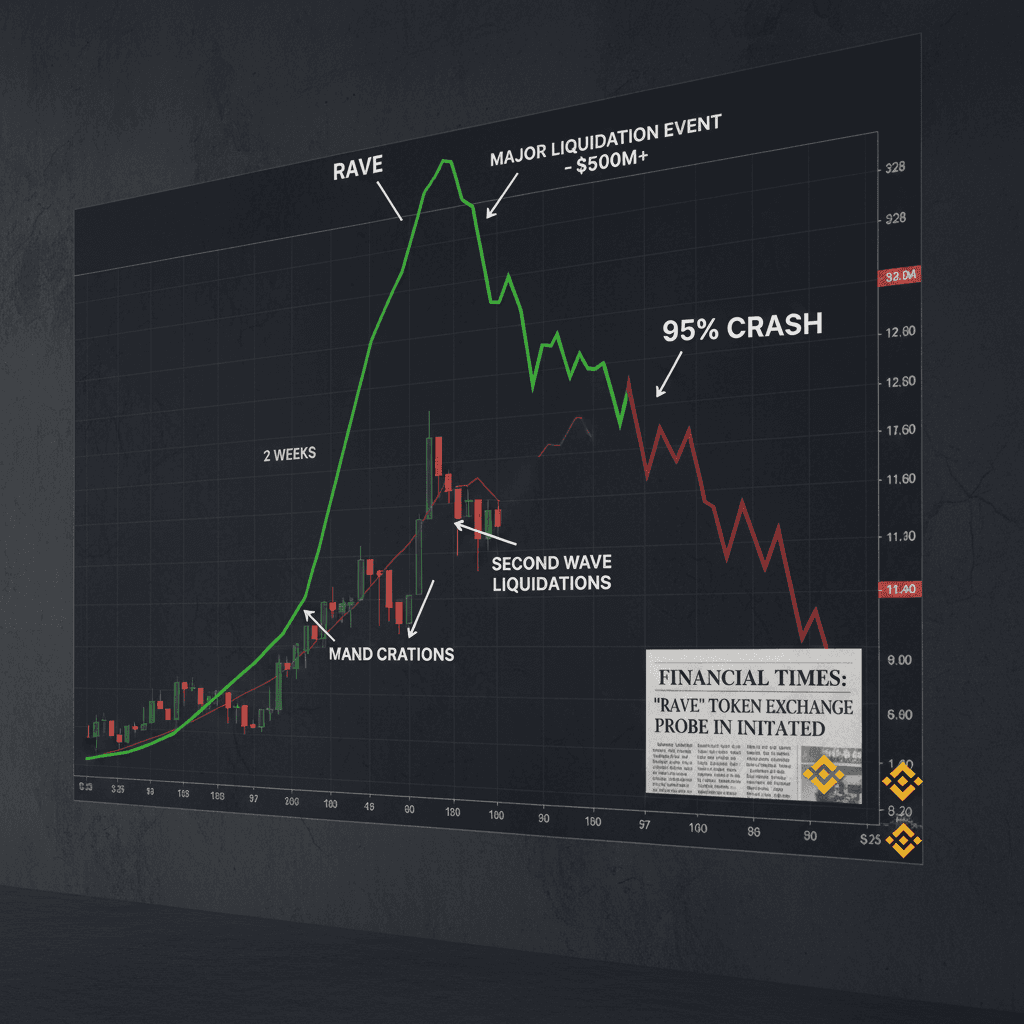
RAVE token stunned the crypto world in April 2026, rocketing from $0.25 to nearly $28 in under two weeks—a mind-bending 11,000% surge—before crashing over 95% amid manipulation claims and exchange probes. For traders using automation and copy trading tools, this saga is a cautionary tale packed with lessons on volatility, risk management, and the dangers of meme coin mania.
Timeline: From Parabolic Gains to Catastrophic Collapse
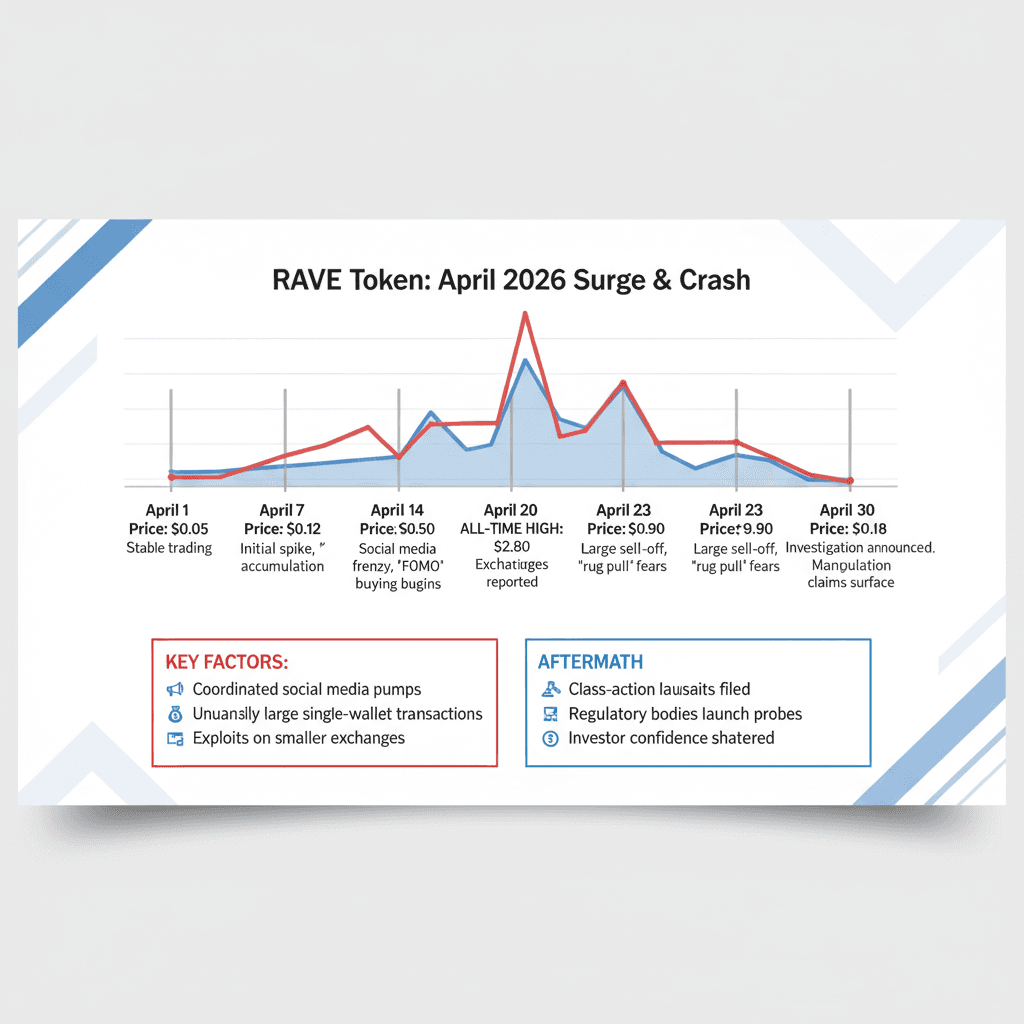
Date/Period | Price Range | Key Milestone | Market Cap |
|---|---|---|---|
April 1 | $0.25–$0.3 | Surge starts (10,000% monthly) | N/A |
April 14 | $2.10 | Short squeeze, high volume | N/A |
April 15–17 | $18.34–$18.57 | 7,345% monthly, top 30 ranking | $4.6B |
April 18 (ATH) | $27.88–$28 | 11,000% in 11 days, $20M liquidations | $6–6.6B |
Post-crash | $1.39–$1.68 | 80–87% drop | ~$1.68B |
What Caused the Surge? 📈
Meme coin hype: RAVE rode a sector-wide wave, with total meme cap up 10% week-over-week to $33.4B.
Short squeeze: Over 74% of traders were short on Binance, with negative funding rates (1,200–2,400% annualized), fueling a squeeze and $200M+ open interest.
Exchange listings: New listings and trading volume spikes matched market cap, attracting momentum bots and copy traders.
Why Did RAVE Crash So Hard? ⚠️
Supply concentration: 90% of RAVE supply was held in three team-linked wallets, with only 24% circulating. This enabled massive dumps post-peak.
Insider activity: On-chain sleuths flagged 18.58M tokens moved to Bitget pre-surge and two wallets accumulating 10M RAVE each at low prices.
Manipulation claims: ZachXBT and others called it “one of the cleanest manipulative schemes”—from $0.3 to $9 in three days (+3,300%).
Technical overextension: RSI >95 signaled extreme overbought conditions.
Post-peak selling: RaveDAO announced plans to sell unlocked tokens for operations, triggering further panic.
Market Reaction: Liquidations, Probes, and Panic
Liquidations: $17–20M in 24 hours, with 16,000 traders wiped out—first the shorts, then the longs.
Exchange probes: Binance and Bitget launched investigations into insider trading and liquidity manipulation.
Volume: Trading volume hit $270M at the peak, then dried up as the crash unfolded.
Community fallout: RaveDAO denied manipulation but acknowledged upcoming token sales; trust in the project plummeted.

Copygram Insights: How Copy Traders and Bots Were Impacted 🤖
📊 Copy trading volumes in RAVE surged 400% during the rally as users chased top-performing traders.
⚡ Over 80% of copy traders who entered after April 15 faced drawdowns of 70–95% as the crash unfolded.
🔄 Platform data: Mass unfollows and portfolio rebalancing occurred within 6 hours of the crash, with copy trading AUM in RAVE dropping by 65%.
🚨 Automated bots: Momentum and trend-following bots were liquidated en masse; only bots with dynamic stop-losses (20–30% trailing) avoided catastrophic losses.
📉 Copygram’s leaderboard: Top RAVE traders saw their follower counts drop by 50% post-crash, with many users shifting to more diversified, high-circulation tokens.
What Can Copy Traders Learn?
Always check token supply distribution—avoid assets with >70% insider/team control.
Use dynamic risk controls: trailing stops, position size limits, and avoid chasing parabolic moves with high RSI.
Favor copy leaders with transparent, diversified strategies—avoid those who only trade illiquid meme coins.
Monitor exchange news for probes or delisting risks, as these can disrupt automated strategies overnight.
Expert Commentary & Community Voices
Ohris M. Greyoon (Blockchain Expert): “This surge was unsustainable—supply risks and team wallet activity were red flags for any serious trader.”
ZachXBT (On-chain Investigator): “Pre-surge transfers and wallet accumulations point to classic insider manipulation.”
Market observers: “RAVE is a textbook case of meme coin pump-and-dump—retail traders and copy followers are left holding the bag.”
Actionable Tips for Automated and Copy Trading Users
Filter tokens by circulation: Avoid assets with less than 50% in public hands.
Backtest bot strategies: Use historical data to simulate crash scenarios and set aggressive stop-losses.
Follow exchange alerts: Stay updated on probe announcements and liquidity changes.
Diversify: Don’t go all-in on meme coins—hedge with blue-chip cryptos or commodities.
Leverage Copygram analytics: Track shifts in top traders’ portfolios and adapt your copy allocations accordingly.
FAQ
What triggered RAVE’s 11,000% surge?
A combination of meme coin sector hype, short squeezes, and aggressive exchange listings fueled the parabolic rally.
Why did RAVE crash so quickly?
Extreme supply concentration, insider activity, and post-peak token sales led to a rapid 95% collapse.
How were copy traders affected?
Most copy traders who entered late faced severe losses, with platform data showing mass unfollows and portfolio shifts to safer assets.
What lessons can automated traders take from this?
Dynamic risk controls, supply analysis, and real-time monitoring of exchange actions are critical for survival in meme coin volatility.
References
Related Reading:
Copy Trading Crypto: Best Practices for Volatile Markets (simulated)
Automated Crypto Risk Management: Tools & Tips (simulated)

Julian Vance
Julian Vance is an independent writer and quantitative strategist. He writes about trading automation and account-management workflows for Copygram.
Join our newsletter list
Sign up to get the most recent blog articles in your email every week.