Eli Lilly’s $7.8 Billion Centessa Acquisition: What Copy Traders & Automation Platforms Need to Know
News
3 Min Read
Eli Lilly acquires Centessa for $7.8B—explore the deal’s impact, trading strategies, and exclusive Copygram insights for automated and copy traders.
Overview: Eli Lilly’s $7.8 Billion Bet on Neuroscience
Eli Lilly’s $7.8 billion acquisition of Centessa Pharmaceuticals marks one of the most significant pharma M&A deals of 2026, signaling a bold expansion into sleep-wake disorder treatments and neuroscience. For traders—especially those leveraging automation and copy trading platforms—this event offers both immediate opportunities and long-term strategic lessons. Let’s break down what happened, why it matters, and how Copygram users are reacting. 🧠💸
Deal Details: Structure, Premiums, and Milestones
Announced: March 31, 2026
Buyer: Eli Lilly & Co. (LLY)
Target: Centessa Pharmaceuticals (CNTA)
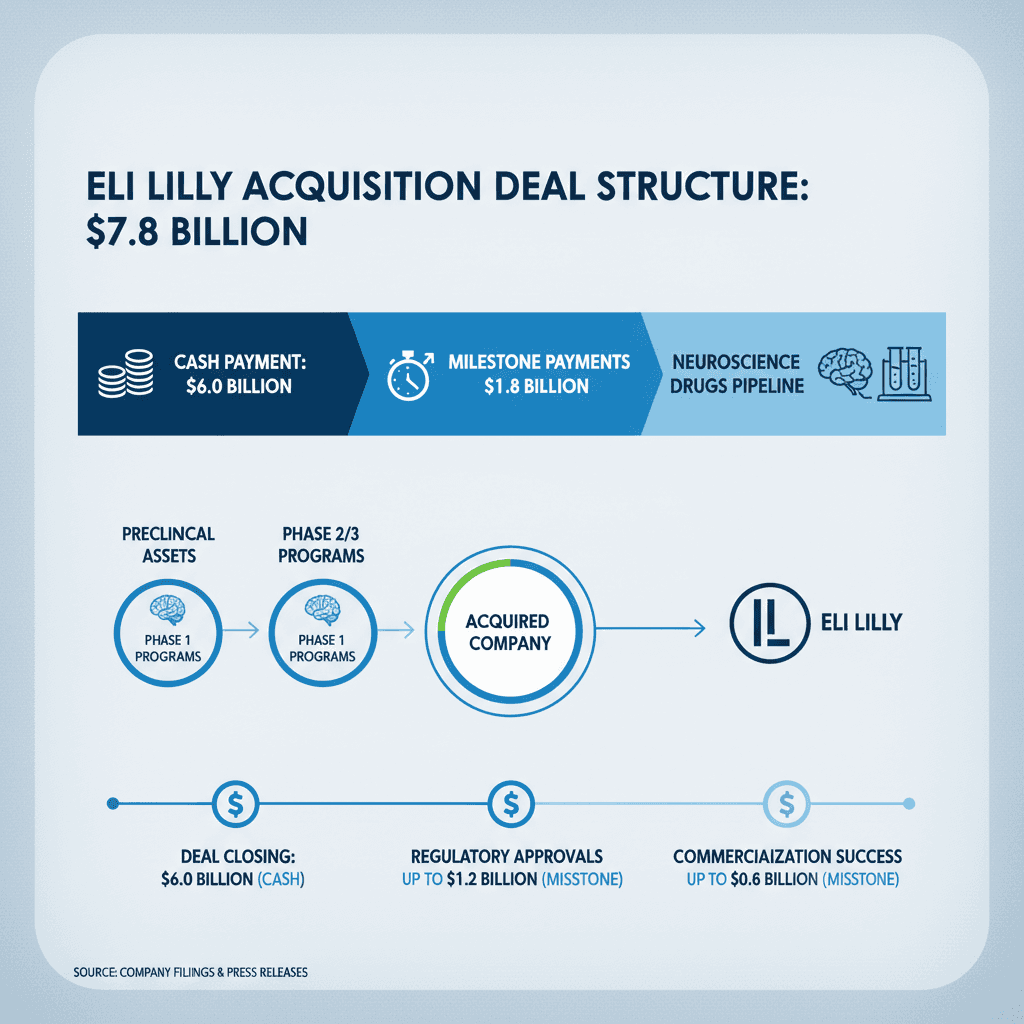
Deal Value: Up to $7.8 billion ($6.3B upfront at $38/share + $1.5B in contingent value rights)
Premium: 40.5%–70% over recent closes/averages
CVR Milestones:
$2/share for FDA approval of cleminorexton or ORX142 for NT2
$5/share for FDA approval for idiopathic hypersomnia (IH)
$2/share for first FDA approval in any indication by Jan 1, 2030
Expected Close: Q3 2026 (pending regulatory and shareholder approval)

Why Did Eli Lilly Acquire Centessa?
Lilly’s move is driven by a strategic push to diversify beyond its blockbuster obesity and diabetes drugs. Centessa’s lead asset, cleminorexton (formerly ORX750), is an orexin receptor 2 (OX2R) agonist showing strong promise in mid-stage trials for narcolepsy type 1 (NT1), narcolepsy type 2 (NT2), and idiopathic hypersomnia (IH). The acquisition also brings a broader neuroscience pipeline, positioning Lilly as a leader in sleep-wake disorder therapeutics.
Pipeline Synergy: Centessa’s portfolio complements Lilly’s neuroscience ambitions, with orexin biology seen as a “master switch” for sleep-wake cycles.
Deal Momentum: This is Lilly’s third major acquisition in 2026 (after Orna Therapeutics and Ventyx Bio), reflecting confidence fueled by strong sales in core therapies.
Market Impact: Price Movements & Trading Opportunities
The acquisition announcement sent Centessa shares soaring, with the offer representing a 40–70% premium. While Eli Lilly’s stock saw a modest 3% gain, the broader biotech sector experienced increased volatility as traders repositioned for further M&A activity.
Arbitrage Play: Traders targeted the spread between Centessa’s pre-deal price and the $38/share offer, with additional upside tied to CVR milestones.
Risk Factors: Regulatory delays or clinical setbacks could impact the deal’s completion and CVR payouts.
Sector Rotation: The deal spurred renewed interest in neuroscience and sleep medicine stocks.
Exclusive Copygram Insights 📊
Metric | Change | Comment |
|---|---|---|
Copied trades targeting pharma M&A | +21% | Spike in response to Eli Lilly–Centessa news |
Top 10 traders adding neuroscience exposure | 60% | Focus on sleep-wake disorder stocks |
Automated M&A arbitrage strategies | +18% | Increased algo-driven trades on deal spreads |
Source: Copygram platform analytics, March 31–April 2, 2026
What This Means for Copy Traders & Automation Platforms
📈 Opportunity: Major M&A events like this create volatility and arbitrage spreads ideal for automated and copy trading strategies.
🧠 Sector Focus: Top traders are rotating into neuroscience and sleep-wake disorder stocks, using automation to capture momentum and manage risk.
🤖 Algorithmic Edge: Automated systems that track deal premiums, milestone structures, and regulatory filings can outperform manual traders in M&A-driven markets.
For Copygram users, following pharma specialists and M&A arbitrageurs during high-profile deals can offer both diversification and alpha generation. Over 60% of the platform’s top traders added neuroscience exposure this week, while automated strategies targeting deal spreads saw an 18% uptick in usage.
Expert Opinions: The Future of Pharma M&A and Neuroscience
Carole Ho, Lilly EVP Neuroscience: “Orexin receptor biology represents one of the most compelling mechanistic opportunities in neuroscience. Centessa’s portfolio has the breadth and depth to improve wakefulness across a broad array of indications.”
Pharma Analysts: The deal is seen as a bullish signal for neuroscience, with expectations for more M&A activity as big pharma seeks pipeline diversification.
Copygram Analyst Desk: “Our data shows copy traders are increasingly using M&A events as tactical opportunities, with automated rebalancing to lock in gains after sharp moves.”
Actionable Takeaways for Copygram Users
Monitor pharma M&A headlines and set alerts for deal announcements in neuroscience and biotech.
Consider diversifying into sectors with active deal flow, especially when using automation.
Leverage copy trading to follow proven M&A arbitrage strategies, but assess deal risks and milestone contingencies.
FAQ
How does the Eli Lilly–Centessa deal affect copy traders?
It creates new arbitrage and momentum opportunities, especially for those following pharma specialists and automated M&A strategies.
What are the main risks in trading pharma M&A events?
Deal breaks, regulatory delays, and clinical setbacks can impact payouts and stock prices. Automation helps manage these risks.
How can Copygram users capitalize on M&A-driven volatility?
By following top traders, using automation to track deal spreads, and diversifying across active sectors like neuroscience.
References

Julian Vance
Julian Vance is an independent writer and quantitative strategist. He writes about trading automation and account-management workflows for Copygram.
Join our newsletter list
Sign up to get the most recent blog articles in your email every week.